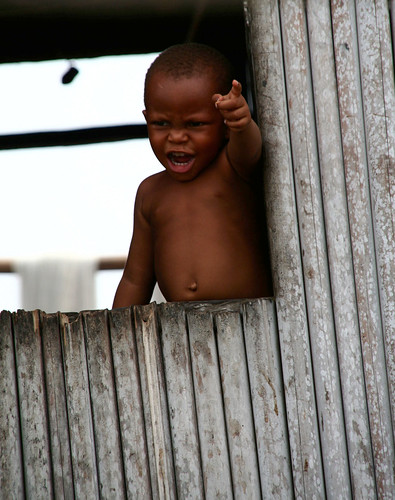
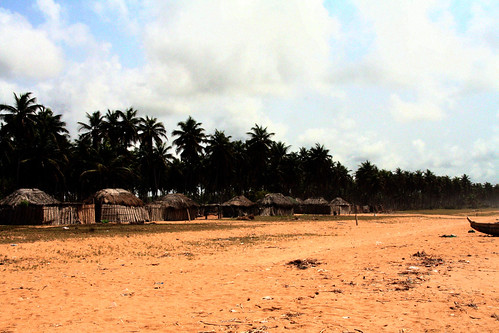
It has been tremendous writing this blog, but as you can tell, there hasn't been an update in almost eighteen months.
Newer posts can be found here:
Thank you for five excellent years!
It always feels so short, but six weeks goes by quickly.
I'm back home, after 156 cases on 77 patients followed by a week in Europe for the wedding of two beautiful people.
Thank you for following. Until next time.
Last week, Agneta took out a man's jaw.
But, before I tell you about that, some background. There is a tension in global health between relief and development. I've written about this before, but to summarize:
Where infrastructure doesn't exist (or does so at a level that barely meets the needs of the population it undergirds), aid comes in two, often mutually exclusive, flavors. At the risk of oversimplification: if attention is focused on the redevelopment of infrastructure, the vast masses of patients who become sick while this infrastructure is being redeveloped are left undertreated. On the other hand, if attention is focused on these patients, the infrastructure is itself undertreated, perpetuating the steady stream of those who need more help than it can provide.
Bridging these two basic paradigms of aid is thorny. Although each is important, each has its stentorian prophets, and development's prophets have, of late, carried the day.
To a (very) large degree, the sort of work that's done on this ship leans toward the less popular of the two, with occasional nods toward development. Sustainability and capacity-building are discussed nearly constantly, local surgeons have been a fixture in the operating room, and agricultural education, mental health education, and primary health education programs form a part of the ship's mandate. (At one point in the last four years there was also a well-digging program; I'm not sure when or why it saw its demise). But, as a whole, we provide relief to the medical infrastructure in the countries we go to.
So, when Agneta took out a jaw last week, it was more than just an operation.
Dr. Agneta Odera is a fourth-year surgical resident at Tenwek Hospital in Kenya. She and two of her Pan-African Academy of Christian Surgeons residency colleagues are on-board for three months, doing month-long rotations in general surgery, anaesthesia, and head and neck surgery. Yesterday, she finished her month with me on the head and neck service.
Agneta is one of the finest residents I've ever gotten the opportunity to train so far in my short surgical career; she has the makings of a great surgeon: she is compassionate, detail-oriented, knowledgeable, and handles tissue like an expert. So, training her wasn't difficult, and last week, she flew solo on a segmental mandibulectomy and reconstruction for a large midline ameloblastoma.
Watching a resident flawlessly perform an operation is always a thrill. Watching her flawlessly perform an operation she had never seen three weeks prior, and knowing that her commitment is to Africa, to surgical development on this continent, and to bucking the brain drain—knowing that she leaves this rotation with at least one measurable, sustainable skill which she can take back with her is more than just a thrill. It is immensely, deeply satisfying.
In talks I have given about working here in West Africa, I have made the point that facial tumors tend to be viewed as something more than physical, that there is the presupposition that patients with these tumors suffer from some supernatural antecedent cause, be it demon possession, witchcraft, or the anger of God.
I have always, however, felt a little bit disingenuous making these sorts of statements, not because I didn't really believe that they were true, but because they were things I had heard from others who work here, and, as a result, were subject to the vagaries of hearsay. In making these statements, I was at risk of perpetuating an exaggeration.
On June 30, the Standard Times Press, one Freetown's newspapers, published a photograph of a child with a facial tumor. I'm reproducing the accompanying article verbatim.*
MYSTERY!
12-year-old turns pig
History will never end, at least for the residents of Makeni. It was on Monday, the 28th of June 2011, around 1:30pm, an alarm was raised by the residents of K_____ Street, Makeni, when onlooker witnessed the unusual event of a 12 year old boy, Kaddy Bangura, transforming himself into a pig at his residence.
Makeni it seems has now become infamous as a witchcraft town. This Reporter upon hearing the news went to the Makeni Police Station where Kaddy Bangura was taken to.
I was informed by the Information Police Officer at Makeni Police Station Sergeant Senessie that the boy is presently with the President of the Traditional Healers at Calaba Town.
Upon arrival, the President, Dr. Kabbah, took me to the room where the boy was housed in and was allowed to conduct an interview with him. Kaddy Bangura narrated his story about how having put faeces in his auntie's Foo-Foo she was about to eat, the "Auntie" made a "Karafilo" (a form of protection against evil) which resulted in his being powerless in enacting the transformation from a pig back to his human form, and was thereby left with a pig head and his human body.
The President of the Traditional Healers Association, Dr. Kabbah, noted that there is something going on in the Makeni area.
He admonished all that witchcraft does exist in Sierra Leone. Dr. Kabbah noted that Kaddy's condition now is such that no doctor on Earth can cure him.
When every store in the market sells cigarettes, plastic baubles, t-shirts, household goods, and chinese bras, demand for your wares is exquisitely sensitive. Do enough people come past your door, for example? And are you able, through sheer force of personality, to lure enough of them into your store itself?
Also, do you look normal?
As unfortunate as it is, we've become pretty comfortable with the fact that appearance correlates with income. So it should come as no surprise that, when Amidu's face started swelling, the flow of traffic to his plate shop decreased. And, since plates were his livelihood, this became a problem: eventually, he had to close his shop. After all, there were enough plate-sellers without distorting (and pungent) ameloblastomas on their faces.
Sometimes it's a an unholy litany here. Ameloblastomas, lipomas, hemangiomas, neurofibromas, cystic hygromas—these are bread and butter of surgery for me here on the ship, repeated week after week. And, to a large degree (without getting into the potential for airway compromise, for metastasis, for malignant transformation), these are cosmetic masses. And so what, really, if you have a lump of fat the size of a small melon growing off the back of your neck, as one of my patients tomorrow has? Is it really important?
As a cancer surgeon, I occasionally find myself thinking the same way—these aren't cancers, after all. Isn't there more important surgery I could be doing? Until it hits me that this is more than just surgery. The cosmetic vs. "important", benign vs. malignant dichotomies are not just flawed—they're outright false.
Because every tumor in that litany is a person. And, though Amidu is still on the wards, there's a chance that when he leaves, business slowly return to his shop.
And that is important.

To begin with, it is, hands down, beautiful. This is the fourth West African city I have worked in over the last three and a half years, and it is by far the most picturesque. Mountains rise directly from the Atlantic, and the town is built on their slopes. Tin roofs, of various shades of red and punctuated by minarets of white (and, in a nod to the fact that this country is still the eleventh-worst on the UN's Human Development Index, massive trash dumps), ascend toward the university, which holds pride of place at the top of the hill. The green-white-and-blue tricolor flies everywhere, due in part to the fact that Sierra Leone just celebrated its fiftieth year of independence. And the city is packed with people. Literally.
The city houses West Africa's oldest university, a larger-than-life cotton tree under which Sierra Leone was founded three and a half centuries ago, and street vendors peddling everything from aluminum foil to Obama umbrellas, from cassava to pre-sliced pineapple to street-grilled meat skewers, from shoes to aphrodisiacs. It is a claustrophobic, energetic, sun-beaten, traffic-clogged, beach-fringed city pulsing with life. Count me impressed.
Docked in the port on the eastern end of town (and, unfortunately, about a two-hour, few-kilometer drive to almost any restaurant), the hospital is humming. In the two and a half days of operating I've had this week (Friday was a ship's holiday), I've done 4 mandibulectomies, one parotidectomy, and a couple of smaller cases
Granted, my time here isn't about numbers (or about Obama umbrellas). I will tell you about the patients themselves next week.
More pictures are here.
Just so you know: if you no-show on the initial, short-haul leg of your 30-hour travel-to-Africa trip, they cancel your trip.
And by "they," I mean American Airlines. This was discovered the hard way.
But—after two flights, two land-rover rides, one ferry ride, some haggling with American Airlines, an awkward encounter with a Lebanese man, and an almost bribe to an army officer,
Hello, Sierra Leone.
I went back to Africa last summer—to Togo. I decided not to blog about it, for reasons that go deeper than a short post like this one can explore. But I'm going back again this year, to Sierra Leone. I will be there from June 5 to July 15 and I'm looking forward to writing about it.
In the meantime, I've started guest-blogging at the Global Health Hub. If you're interested in global health, this is a great jumping-off point: it aggregates news, original pieces, global health blogs, job opportunities, and events, all in one place.
Last week, The New York Times published an article entitled "A Promise to Be Ethical in an Era of Immorality". It tells the story of a number of student-led initiatives in American business schools toward developing an oath for B-school graduates.
The oath—its content varies by school—pledges the students to, in the words of the article, "act responsibly, ethically and refrain from advancing their 'own narrow ambitions' at the expense of others."
For millennia, physicians have made similar vows:
I will prescribe regimens for the good of my patients according to my ability and my judgment and never do harm to anyone.... In every house where I come I will enter only for the good of my patients.

If you happen to be in New York City in a couple of weeks and find yourself, on the night of Thursday, the 14th of May, with nothing to do and a hankering for premade cookies and a small talk on the practice of medicine in the developing world, consider clicking here.
Registration is free, but an RSVP is required.
Blandine* is a beautiful, playful seven-year-old girl, who doesn't seem to notice the one thing about her that everyone else sees first: In the side of her head, in her infratemporal fossa, she has a large mass (What am I saying? Does anyone in this country have a small mass?). It extends to where her carotid artery follows its convoluted path into her brain. It impinges on five different nerves as they exit the skull on their way to her face, her tongue, the rest of her body. It, quite literally, goes for her jugular.
But to look at her, you'd never know. Her face is asymmetric, for sure, but that's about it. She's a happy seven-year-old.
So, explaining to her father that the surgery we were proposing might result in some very serious untoward events was difficult. But more than that—it destabilized the very core of the way I think about surgery. Not to put too delicate a point on it.
See, it made me question what it really meant to give informed consent.
Until Blandine, this was obvious. You go to the doctor, and she recommends a procedure. You expect that her next ten minutes are going to be spent explaining everything that could go wrong, scaring you to death with words like "cardiovascular compromise" or "cerebrovascular accidents." And then, in a perverted sort of altar call, she'll place a single sheet of paper in front of you, crammed with more words than the constitutions of some countries, and ask you to sign it. You will, probably without reading it, because that's what you're supposed to do, because in doing so you've declared that you've been informed of every possible risk, benefit, and alternative, and you still want to proceed with the surgery. Because it has become your decision.
The reasons for this are legion. There are the obvious, legal ones ones. There are the ones that place doctors firmly at fault: we want to protect ourselves, cover our rumps, in a completely self-serving way. We think that if the patient makes the decision, then we're absolved of all culpability if anything goes wrong (this is obviously erroneous).
But then there are the deeper, cultural ones, ones that I'd never thought to assume didn't exist everywhere. And it's on these that the entire concept is predicated. Very early in medical school, we learn words like autonomy and non-malfeasance and paternalism (and its more politically-correct cousin, parentalism; amazing how much stock we place on anagrams). We learn that, as doctors, we are supposed to tell you everything that could go wrong. We're supposed to give you as much information as we can. And you are the one who's supposed to make the final decision. We aren't to be paternal. You are to be autonomous. Obviously. This is so deeply ingrained in us as to be self-evident.
As it turns out, this self-evidence is, well, not self-evident. It's firmly based, instead, in the fierce individualism of our Western cultures.
After every sentence, with every enumerated risk, Blandine's father simply smiled at me and told me that she was in God's hands. No matter how strong I made my wording, no matter how bleak a picture I tried to paint, he was unwavering in this assurance. God was in control. God would bring his daughter back to him. God would make sure she was able to speak and swallow and move her face and stick out her tongue. God wouldn't let anything happen to her. This wasn't some blind, uninformed faith, either. God was really going to do this.
I found myself flummoxed. I wanted to take him by the shoulders and shake him, shake that assured smile off his face. Yes, I wanted to say, God is in control, but don't you see? Don't you understand? She might not...! He might not...! She might die! Do you hear me?
As missionaries, our objective cannot be to change the culture of a people. We do a tremendous disservice when we start believing that our way of viewing the world is the only correct way. But what happens when culture flies in the face of your own self-evidence? What if the very core on which you've built your day-to-day interactions with your patients—autonomy, self-determination—is whisked out from under you?
What if these concepts don't even enter the mind of the person you're talking to—and his overarching motifs (innate trust, for example, or determinism, or even fatalism) are themselves anathema to your Weltanschauung? Who is right? Whose worldview wins? Shall the twain ever meet?
I don't know.
I am happy to report, though, that Blandine's father's faith was borne out in the way he so inexplicably expected it to be. And in doing so, he challenged my reliance on autonomy—either as abdication or as deeply-held worldview—possibly irreparably.
And with that, I'm finishing my last post from Africa. I leave on Sunday. Thanks for following along.
Until next year.
Two patients died earlier this week.
Now, I'll grant that in the day-to-day running of any hospital anywhere in the world, this may not seem such a significant event. People die every day. And this is doubly true in the world of head and neck surgical oncology, where the overall survival rate hovers around 50%.
Before you chastise me for being impersonal: this knowledge is just the opposite. Instead of depersonalizing, it frees the head and neck surgeon to negotiate the increasingly blurred line between physician and priest, to be fully present in someone's life at its most weighty.
But things are different on the ship. The hospital is smaller (it's a ship, after all), and most of the surgery we do is not for malignant disease. We work, instead, to restore to patients the right to look human, the right to re-enter society.
So death hits harder.
And it makes one ask: Why, then, continue? Specifically, what's the point of attempting, in our imperfect way, to heal, when all healed people eventually die? Why prolong the inevitable?
Obviously, this question isn't an original one. In the introduction to his 1849 book, The Sickness Unto Death, Søren Kierkegaard asks this of a well-known story:
And what help would it have been to Lazarus to be awakened from the dead, if the thing must end after all with his dying?
If you turn faith into simply the hope for pie in the sky when you die, and an escapist spirituality in the present, you turn your back on the theme which makes sense of the whole story... [You] may feel some sympathy for the battered and bedraggled figure in the ditch, but [your] message to him will always be that, ultimately, it doesn’t matter because the main thing is to escape this wicked world altogether.
the world is beautiful not just because it hauntingly reminds us of its creator, but also because it is pointing forward: it is designed to be filled, flooded, drenched...as a chalice is beautiful not least because of what we know it is designed to contain, or as a violin is beautiful not least because we know the music of which it is capable.
I write this post with the unsettling knowledge that I'm firmly ensconced as part of the problem. And I have no real solution to offer.
That said, it is never pleasant to watch the insidious descent of a group of people into the indenture of tourism.
Last weekend, in an effort to see the sights of southern Benin, a group of us took an hour-long, eighteen kilometer boat ride to Ganvié. Situated in the middle of a shallow lagoon, Ganvié has been around since the 1600s (at least), a village of refuge, built on stilts. According to the story, the Dahomey warriors were forbidden, by their religion, from entering the water. And, because their prey, the Tofinu people, were intent on avoiding subjugation by the warriors, they capitalized on this fact, escaped to Lake Nokoué, and set up their town.
Ganvié has been minding its own business ever since.
However, a more nefarious sort of subjugation has begun—one which has no respect for the spirits of the lake. Supposedly (this is only hearsay; I have no corroborating evidence), Ganvié first became more widely known after it featured in a National Geographic special a couple of decades ago. Whether or not that is true, there has definitely been an inexorable incursion of tourism into the town. 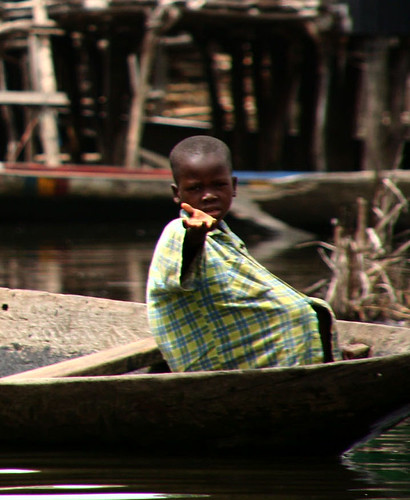
It's not a far reach from here to Kyrgyzstan.
This isn't a new phenomenon. In his Studies in Classic American Literature, DH Lawrence wrote
Behold then Septimus Dodge returning to Dodge-town victorious. Not crowned with laurel, it is true, but wreathed in lists of things he has seen and sucked dry. Seen and sucked dry, you know: Venus de Milo, the Rhine or the Coliseum: swallowed like so many clams, and left the shells.
I am so convinced of the advantages of looking at mankind instead of reading about them, and of the bitter effects of staying at home with all the narrow prejudices of an [Englishman], that I think there should be a law amongst us to set our young men abroad for a term among the few allies our wars have left us.

Just on the Togolese border, about a two-hour drive west of Cotonou (it's a narrow country), sits a resort. Grand Popo, despite its particularly fetching name (which I swear I didn't make up), is beautiful.
I'm told.
Last weekend, six of us made it our destination (as much as I'd like to pretend otherwise, it's not all work here). Unfortunately, exploring West African countries isn't always a salutary experience—at least, this time, there were no car accidents.
Ready for a relaxing day in the sun, we set off out of Cotonou, and onto a dirt road that runs west along the country's shoreline. Unpaved, and relatively untrafficked, this road offers both spectacular views and a chance for you to test the mettle of both of your esophageal sphincters. And the resolve of your tires.
What ours didn't, unfortunately, have was a jack that worked. We tried everything (pens, sticks, knives), but without a pin around which the lever could ratchet, the jack was nothing more than a bright red, human-sized metal rod.
Because a faulty jack isn't enough, our wrench was also one size too big for the lug nuts. No amount of hoping (and we did our fair share) was going to change that.
In this hopefulness, we were helped by a cadre of Beninois (their luck was no better than ours), and a few, kind, passing French families (ditto), including the French ambassador to Benin (at least, according to his wife). After an hour of jumping on wrenches, we did what anyone else would do. We called the ship for help, sat down on the side of the dirt road, and ate cheese sandwiches. The Beninois disappeared. And we got to enjoy being stranded in some of the most beautiful surroundings you could imagine.
Three hours later, the ship called back. Our erstwhile savior had gotten lost and come back home. But, another group was at a pool 12 miles away, and were on their way.
Their jack worked. Their wrench fit our lug nuts. And, with a fair amount of shouting back and forth between the us and the Beninese men that had mysteriously reappeared, we got ready to leave.
Tut tut.
"You must," I was told, "satisfy these men." Yes. Satisfy. I'm not making that up either.
We tried giving the group some money; this served only to inflame things. Volley after volley, satisfaction being more loudly demanded with every increasing incursion into personal space. Exasperatedly, I finally asked, "How am I supposed to satisfy you?" To which my interlocutor answered, "I can't tell you. It's up to you."
This was Samuel Beckett on crack. Estragon's boot wasn't ever coming off.
Instead, we piled into the car, gave them the money, and decided that their satisfaction was up to them.
We drove through Ouidah, the birthplace of voodoo (or vodoun), past the Door of No Return, commemorating the point on the coast of Abomey from which Portuguese slave ships departed with their cargo of humanity and self-righteousness, and to Casa del Papa, a mere shadow of Grand Popo. With a worse name, but, importantly, with a pool.
The official numbers—and, more importantly, the official pictures—are finally available.
2773 patients seen at our screening days
513 surgeries scheduled, and
300 patients booked for follow-up appointments prior to surgical scheduling
This doesn't include patients undergoing eye surgery—we do about 25 of these a day, nor the 30 that show up on the dock daily. Word is getting around.


Seventy years ago, when Benin was still Abomey, a Q-tip-shaped parcel of land wedged within French West Africa; when the memory of Portuguese slave ships was fresh and the mention of Dahomey warriors still struck fear; when Mohandas Gandhi was fasting, Adolf Hitler was attacking, Judy Garland was following yellow bricks, and John Steinbeck was writing about angry grapes—seventy years ago, when the world was declaring war on itself for the first time, Gbayi* got sick.
It may have been measles—it often is. The thing is, unlike others who got what he got, he survived, but the victory was unfortunately Pyrrhic: not long after, his lips fell off.
No, seriously. I've written about noma before, but it never ceases to amaze me. See, we all carry around in our mouths somewhere on the order of 800 species of bacteria, but, besides feeding on the detritus you leave behind when you don't brush your teeth (and lining the pockets of Procter & Gamble executives), these bugs do very little of dramatic import.
Except in noma.
In noma, an immune system weakened by a recently-fought-off infection becomes unable to contain the bacteria, and they're left alone, free to devour more than food.
Why they attack some patients and remain docile in others, I don't know. But seventy years ago, when the French were still guillotining people and Clark Gable was going with the wind, they ate Gbayi's upper lip. And part of his nose.
Gbayi is now 77 years old. Age has rendered him unable to walk—he was carried to the stadium on his son's back—and, seven decades later, his hands perpetually hover around his mouth, as if by doing so they can prevent the shame that has shadowed him since Einstein was researching atomic bombs.
And Gbayi was only one of over 2000 stories we saw in two days at the Hall des Arts, Loisir, et Sports this week (loisir, for sure: half the chairs in the stadium were brown—sometimes garish red—leather armchairs, incongruously defying the remaining wood-and-metal seats; they, I assume, are where the important people sit). Over the course of two days, patients who had begun lining up in the middle of the week wended their way through the sports stadium toward the surgical schedulers, who would give them a date for their surgery. Not everyone made it there, but we said yes far more often than we said no.
Massive tumors and goiters the size of watermelons, clubbed feet and contracted arms, burned faces and bowed legs, hernias, hydroceles, and fistulas—each accompanied by a story like Gbayi's.
Physical deformity, a lawyer once wrote, calls forth our charity. The need, as always, is greater than any group of humans can help. But that is perpetually a good reminder.
The first patients arrive on Monday. Pictures will be forthcoming, but, in the meantime, here's a six-minute video from the day (Gbayi shows up near the end):
All it took was a nun.
The flight from New York City to Paris and on to Benin was about as uneventful as flights go; maybe half an hour of turbulence and two complimentary glasses of cognac rocked the entire sixteen hours of travel. Until I landed in Benin, the only thing eventful that had happened to me was that, despite my best efforts, I thoroughly and completely lost an armrest war to my left-hand neighbor, who seemed to consider that his window-seat ticket also bought him a controlling share in the adjacent aisle seat.
Given that he was approximately double my size (you will see...this promises to be a recurring theme), I'm surprised I lasted as long as I did—which, to be fair, was only about 27 minutes. I had little choice but to become intimately familiar with the contralateral armrest, and each passing, just-wide-enough-to-make-you-rue-elbows, duty-free-stocked beverage cart propelled by plastic smiles.
All this changed, though, on arrival at Cotonou's Cadjehoun airport. Miles more developed than Monrovia's airport, Cadjehoun has regimented lines with regimented passport agents sitting at actual, regimented desks behind actual, regimented plastic, with actual stamps, making actual, official, stamp-like sounds.
It's a thin veneer.
Evidently passport confiscations are de rigeur here; my kindly, smiling, official-sounding passport agent conveniently "couldn't find" my passport after she sent me aside to fill out an arrivals form (the first attempt being deemed subpar). She was sure she'd given it back to me. I must have just misplaced it.
My refusal to believe her led to a swift surrounding by three other very kindly and official-sounding passport agents, reminding me that—don't you know?—they were police officers and would be sure to deal with me as police officers do, merci beaucoup. Thankfully, the bluster didn't last long, and some well-placed obstreporousness aided the magical reappearance of my passport.
A little shaken, I got my hands on one of a number of freely-roaming luggage carts and settled into the throng of people waiting for suitcases. Apparently, I chose poorly, because, of all the passengers, with all their luggage carts, I was singled out.
"That's my cart," someone behind me said.
I saw no reason to believe him, and, admittedly, told him so.
"You use my cart, you pay me," he protested.
This went on for a few parries, just long enough to settle the matter peaceably, without the exchange of either money or fisticuffs. But, unfortunately, also long enough to infuriate a thrice-as-large-as-me passenger from my flight (who, incidentally, happened to be friends with my armrest mate). He turned around, sheer anger on his face, took my two bags and proceeded to hurl them to the floor with as much force as he could muster (which was a lot).
As if this wasn't dramatic enough, he then began screaming at me, his words mostly drowned out in the shower of spittle I found myself under. When he started pushing—hard—a small British nun in a grey habit stepped between us. For this, I'll one day get to thank her.
After my erstwhile attacker had returned to his conversation with my erstwhile armrest antagonist, she turned to me, said, "They do things a little differently here," and quickly disappeared into the throng.
Evidently.
Because, evidently, the ship is short, especially for the start of the outreach. So if you are an OR nurse (and I know there are some of you out there), or if you know one, let me know!
They say that when you come back from Africa, you enter a bizarrely perpetual dissociative state: your time in Africa was real—as real as the red earth that inexorably worked its way beneath your fingernails—but somehow, in North America, it's relegated to that portion of your psyche usually reserved for recurring dreams. The part of your psyche that engenders nostalgia, that remembers only snippets. The part of your psyche that makes you relate what you've seen with such jarringly juxtaposed sentences as, "So I was standing. On a dock. Jutting out into the Atlantic. Somewhere in West Africa. And half my friends thought I was in Costa Rica. And he was having a seizure, but his wife thought he was demon-possessed." It's the part of your psyche that remembers Amachin and Alimou and Michael (who, thanks to the quiet tenacity of a woman named Michele, has just returned from Ghana, disease-free), but silently downplays the weevils and the seasickness, the two-minute showers and the quickly-rotting bananas swimming in their liquefied remains.
That part of your psyche, though, beckons you, and, despite your greatest Odyssean efforts, no amount of rope can strap you tight enough to the mast of your passing vessel for you to withstand it.
So, I'm going back. Which means that, after seven months of pure silence, you—unless you hastily unsubscribe now—get to be regaled with stories cobbled together from not altogether related experiences, overly-stretched metaphors (Look! One already! A certain dead Greek poet is viscerally angry right now...), excessively long and parenthetical sentences, and ruminations on the often competing roles of medicine, volunteerism, NGOs, bottom lines, faith, and culture.
This is all because, for the six weeks between 15 February and 30 March, I've been given the spectacular chance to go back on board the Africa Mercy for another round, this time in Benin (the map is on the right of the blog's homepage). I land just after the ship docks in Cotonou, and get to be there for the opening of the hospital, for screening day, and for the first five weeks of surgery.
Wish me luck!