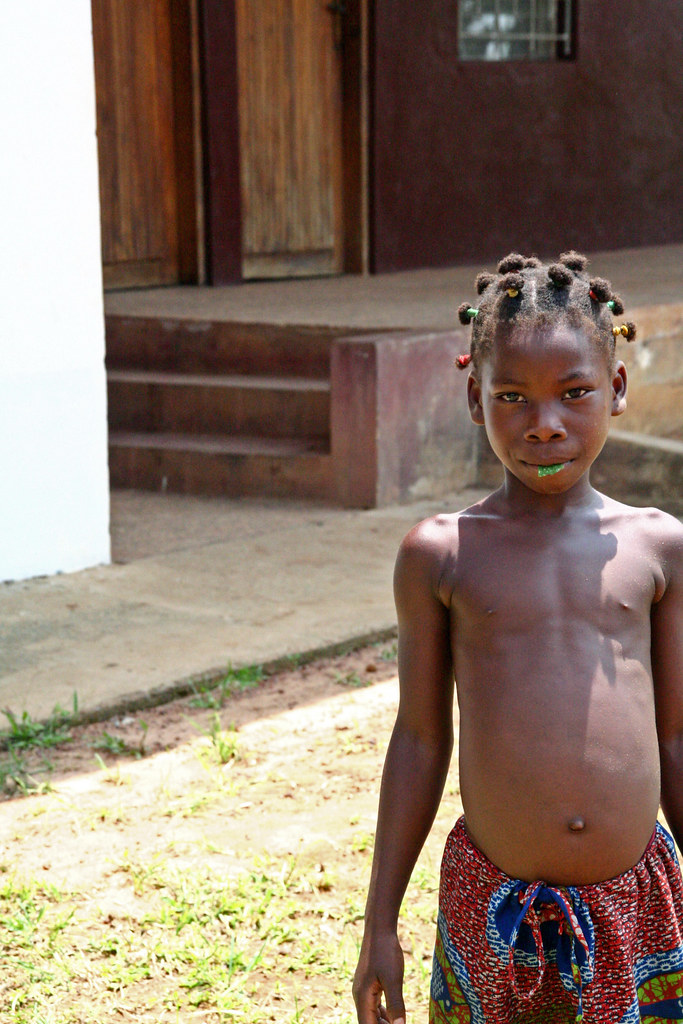
I had no plans of visiting Guinea. The trip to Robertsport was enough off-road adventure for one outreach. I thought.
But, the ship maintains a departures and arrivals list, available publicly (to the crew, at least). I was perusing the this list one day, bemoaning the constant exodus of outright amazing people, when I ran across my name. Evidently, I was leaving the ship on May 6.
I had no idea.
Turns out, it had been decided that I was joining a group of four others and heading up-country—and out of country—to Guinea, in search of more patients. See, despite a wildly successful screening day in February, the entire surgical schedule wasn't filled (this, likely, is due to the fact that the ship has been in Liberia a few times before—it's actually made a dent in the need here). So, every few weeks, teams have been sent out to other parts of Liberia, further afield from Monrovia, looking for patients who might have been missed. We're flinging out a broader net.
The net, on May 6, was to extend to the eastern portion of Guinea, to the section of the country, just across the Liberian border, called Guinée Forrestière. Of the four topographic sections of Guinea—from west to east, they are Basse-Côte, a thin band of coastal land encompassing Conakry, The Fouta Djalon plateau, Haute Guinée, and finally Guinée Forrestière—the latter is the furthest away from the capital, which is where the Africa Mercy will dock the next time it visits the country. As a result, Guinée Forrestière is better served from Liberia than from its own port, 24 hours away.
It was, therefore, to the virgin African rainforests of Guinea that we set out, across roads that started out pretty well (and ended up making us thankful for four-wheel-drive control), toward N'Zérékoré, an NGO hub, and the biggest city in the region. Just outside of N'Zérékoré is a small village called N'Zao, and a mission hospital at which we were based.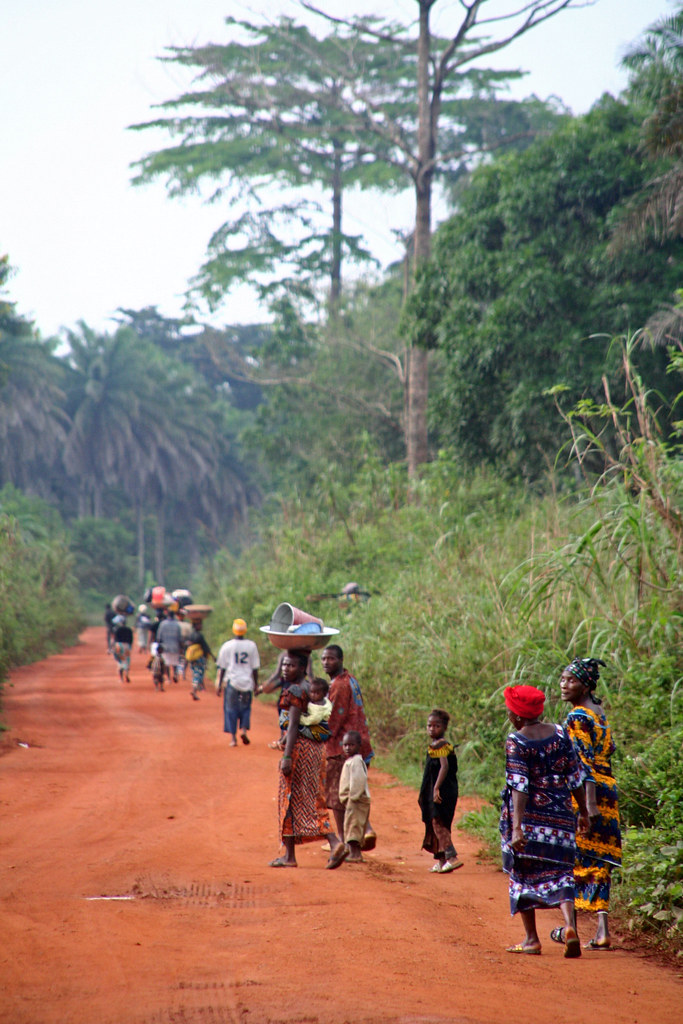
Let me tell you: land borders are the same, the world over. And they are infinitely more fun than any airport immigration, because, for the most part, they are shacks, staffed by bored men and their muscid companions, and adorned with tattered calendars of yesteryear. The land border between Liberia and Guinea is no different. Except that the calendar of yesteryear was juxtaposed with a ghastly photodocumentary of Saddam Hussein's execution.
The land border is to your left as you drive, just before the leper colony (no, I'm not making that up). There are five checkpoints, each a little more thinly-veiled attempt at extracting your money than the other. There is only one such checkpoint on the Liberian side; the rest are across the bridge. That's right: four checkpoints before Guinea lets you into its embrace. It's a long, protracted no-man's land, filled with plenty of men. And women. And children. And livestock.
Which, incidentally, you don't notice are missing from Liberia until you leave the country. Guinea has livestock everywhere. You wonder where Liberia's all went; unfortuantely, the gruesome truth is that they were all eaten during the war. But not so in Guinea. The road is littered with fowl (guinea- and otherwise), pigs, goats, sheep, dogs, and cats.
Once you enter no-man's land, the demigod that sits enthroned in each checkpoint expects a little gift from you. On our way into Guinea, we were guided by a man who's lived there for nearly two decades and were therefore shielded from these dealings. On our way back, we weren't. And, I didn't realize that this was the culture until I walked out of our first checkpoint with all five passports, having thanked the guard, shaken his hand, and sprinkled blessings on his family. As I was leaving, he called to me, "Et quoi? Tu n'as rien pour moi?"
Thankfully, our hosts in Guinea had anticipated this turn of events. They had given us enough calendars (yes; calendars) for each checkpoint. This small offering seemed to appease the little demigod, and we were let through. It worked on all the others, too. Who would have thought? I may try the calendar gambit on my way into Canada.
I'm just starting to get comfortable with this African way of dealing with things. Case in point: on our second day in Guinea, we were taken up the Nimba mountain range. It forms part of the border and is eminently climbable from the Liberian side; it's a common trip for crew from the ship. The Guinean side, though, has been taken over by a mining company and is closed to foreigners. Except that one of our hosts knew someone in the local government, who knew someone else, who took the day off to show us around. And to show off his political muscles at the mining company's gate.
Because of this man's clout (I never got his name. He was simply known as The General), we were welcomed at the mine by its director. Whose smirking first words to us, followed closely by a conspiratorial guffaw from his underlings, were, "I'm glad your primary concern is healthcare and not the environment." We were shown around the compound, given lunch, and sent away on a tour of the region.
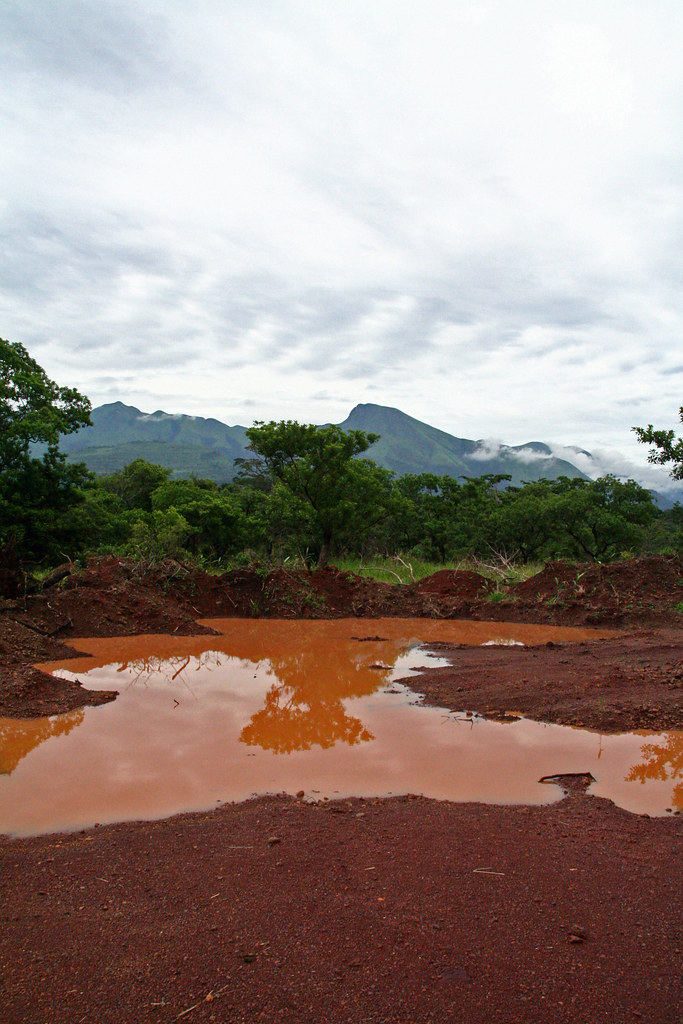
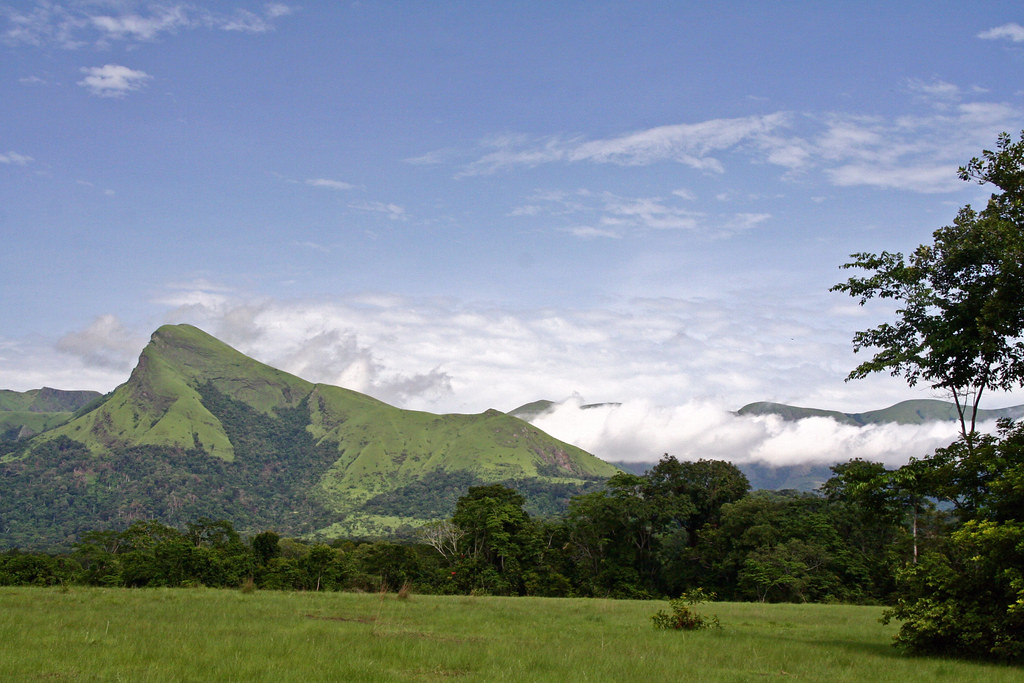
When all was over, The General also graciously took us to his home, to meet the mayor, and to dine (again) on rice, well water, and boiled kidney and liver. I'm not making that up, either.
The screening was a success, by the way. Twenty-two patients will come down to the ship in the next few months for their operations. One of these has already done so. 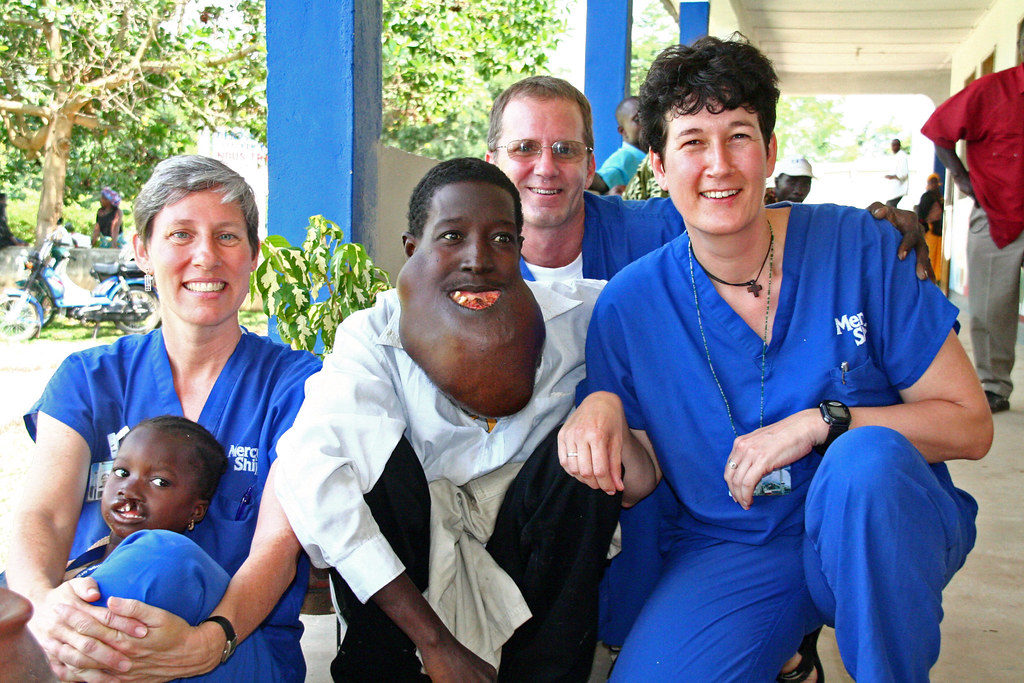
For this man, a twenty-two-year-old economics student, the boiled kidney was worth it. Despite a six-and-a-half-pound tumor growing on his face, he was one of the kindest men I've met. For a third of his life, he'd had this tumor on his jaw, subjecting him, likely, to insane amounts of ridicule. But when the cameras came out, he dove into each one's field. His smile was infectious. His attempts at befriending a child with a cleft lip and palate were heartfelt (if immediately rebuffed; she's in the picture too). And as I write, he's asleep on the wards. Six and a half pounds lighter.
18 May 2008
The etiquette of calendars

09 May 2008
Can we pull a Moses?
The rains are getting worse.
I ventured out to downtown Water Street with fellow crewmember Megan today. Although overcast, the weather was great. A slight breeze ruffled our hair as we clomped down the gangway in our flip flops and made our way to the main gate. Before I left my cabin, I briefly debated bringing my umbrella. However, a misadventure last weekend had left a small explosion of SPF 50 sunscreen all over it, and so I decided to leave it behind.
It started out as a relatively lucky transportation day. As we walked out of the main gate we started making a lateral chopping motion with our hands (the only proper way to hail a Liberian taxi). After about 5 minutes we were in a run-down yellow cab crammed with 6 other people, on our way into downtown Monrovia. At Broad Street, our driver turned to us and told us we had to switch cabs, to another one going to Sinkor. And so we hopped out and started to search. Buses and taxis passed us by, all too full or too busy going somewhere else. Finally, a guy driving a Cellcom service van stopped and we hopped in, on our way to Sinkor.
We had a quick lunch in Sinkor, and then tried to find another taxi. Again, an unfruitful expedition. Finally, we were picked up by a well-meaning Lebanese contractor, who gave us a ride back to downtown Monrovia.
Hitchhiking has never been my thing. However, in Monrovia, with NGO and UN workers totaling over 10,000, it is often a better bet to get a ride in one of their vehicles than to take your chances with a yellow cab. Yellow cabs here are often crammed 7 people to a car (2 in the front passenger seat and 4 in the back, plus a driver), have cracked windshields, and lack door or window handles. These Nissans and Sunnys are the most prevalent vehicles on the road, and are often plastered with slogans like "City Boy" or "God's Choice." Or worse.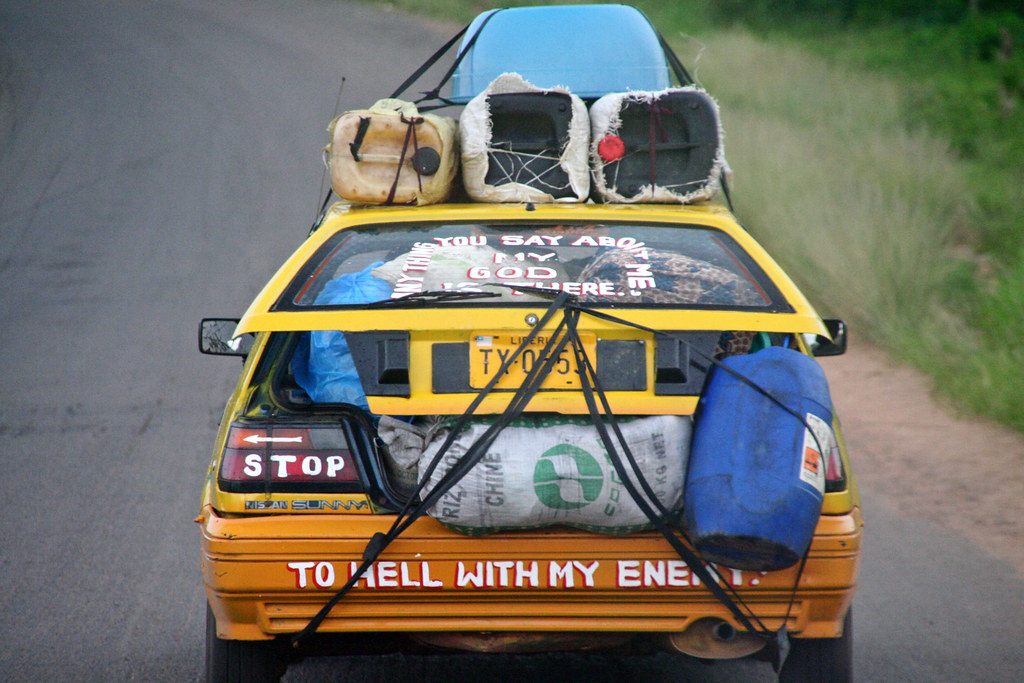
Water Street is known for its fabric shops. The larger, more prosperous shops are Lebanese-owned, with proprietors who travel as far as Dubai where there is a large fabric exchange. Cloth vendors converge from all over the world to hawk their wares, and these fabric shops sell anything from cotton prints and tie-dyes to fine Japanese lace and velvet leopard print. Smaller shops usually line back alleys, and are more wooden shacks with plastic tarp than anything else. Finally individual women and boys carry lappas (one lappa is 2 yards) bundled together in plastic tubs and perched on their heads. These vendors usually sell only African prints, which are always a swirl of color, and on closer examination reveal a repeating motif—chickens, crustaceans, giant tubes of lipstick, or tree stumps.
We were happily browsing on Water Street when the skies opened up. The erstwhile roads and sidewalks quickly became a mess of trash, mud, sewage, and water. With no drains and a fierce tropical storm, we were quickly left knee deep in filth. As we debated how to reach higher ground, the local Liberians, huddled underneath awnings, started to shout things like "Roll up your pants!" and "This is Africa!." That's when Megan turned to me and asked, "Can we pull a Moses?"
14 April 2008
The Bong Mines
On Saturday, seventeen of us rose at the crack of ungodly to head out to the Bong Mines. It was a gorgeous morning, clear and cool (in a manner of speaking...this is equatorial Africa, after all). We piled into the two oldest Land Rovers in Mercy Ships' fleet and struck out for the sole functioning train in the entire country.
The train we were headed towards was built a few decades ago, specifically for the transport of iron ore, and is therefore unused to passengers. There is, however, one passenger carriage, for the president should she decide to make the ride. Otherwise, it's you, your Land Rovers, a few bulldozers, and some tanks of carbon dioxide, all piled onto flat-bed cars and pulled behind one of the only two engines that still work in this country (unless it's last weekend, in which case that number is reduced. To one.)
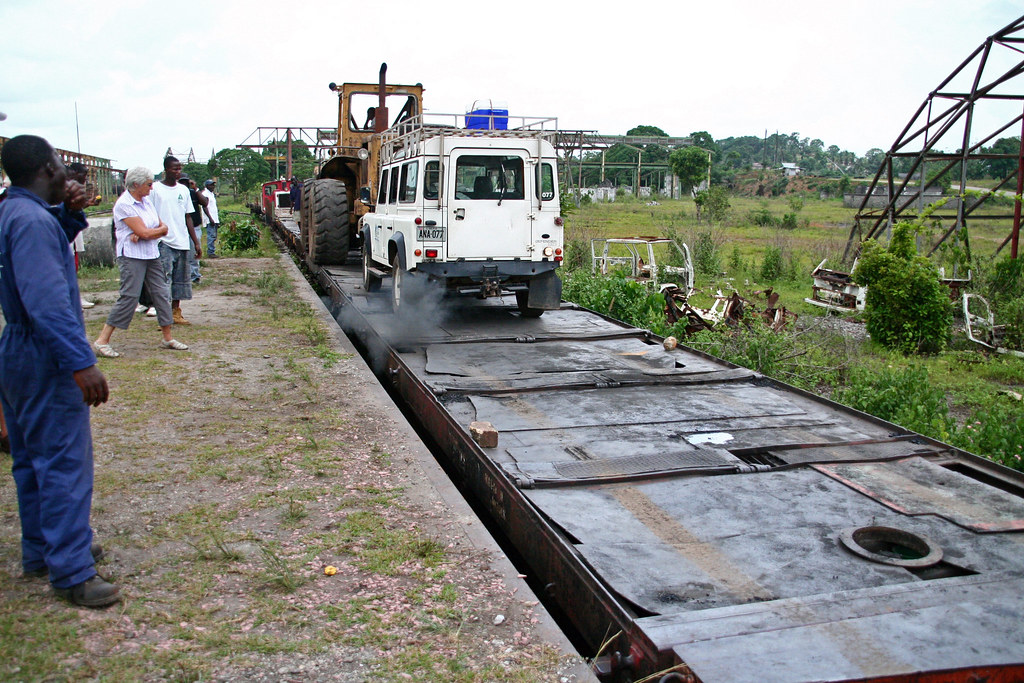
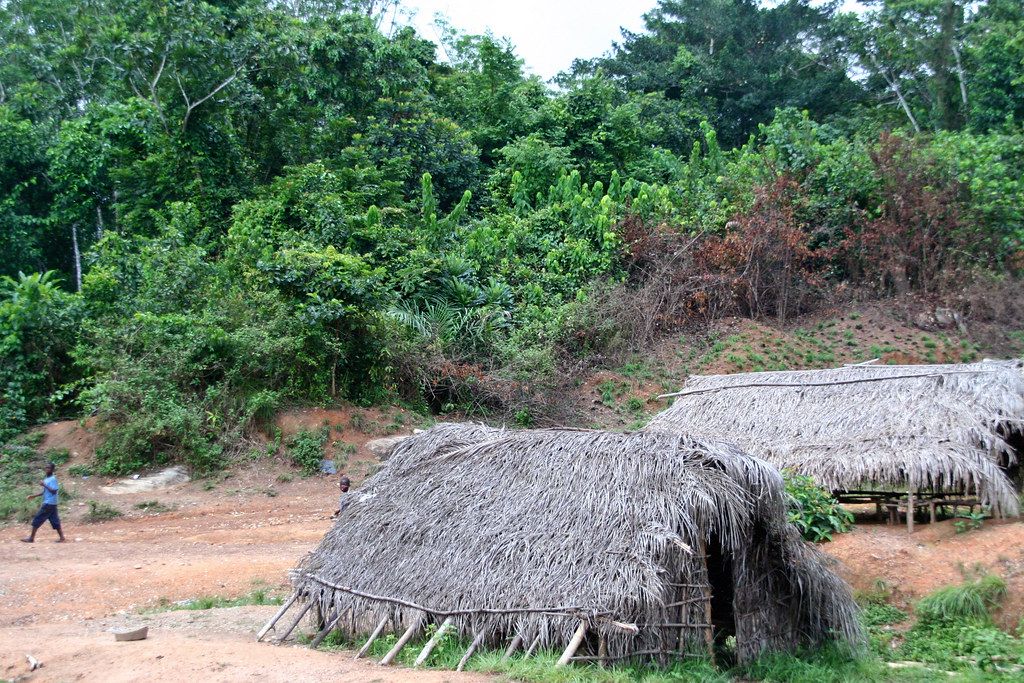
We maneuvered our cars onto the flatbeds, climbed on top of them, and watched. It's a two-hour, eighty-kilometer ride to Bong county and its mines, past rainforest, past villages with children screaming for your attention and waving with all their hearts, past brick-and-corrugated-tin houses as you leave Monrovia, then thatch-and-mud as you get further out. And then, just thatch, propped up with a few well-placed sticks.
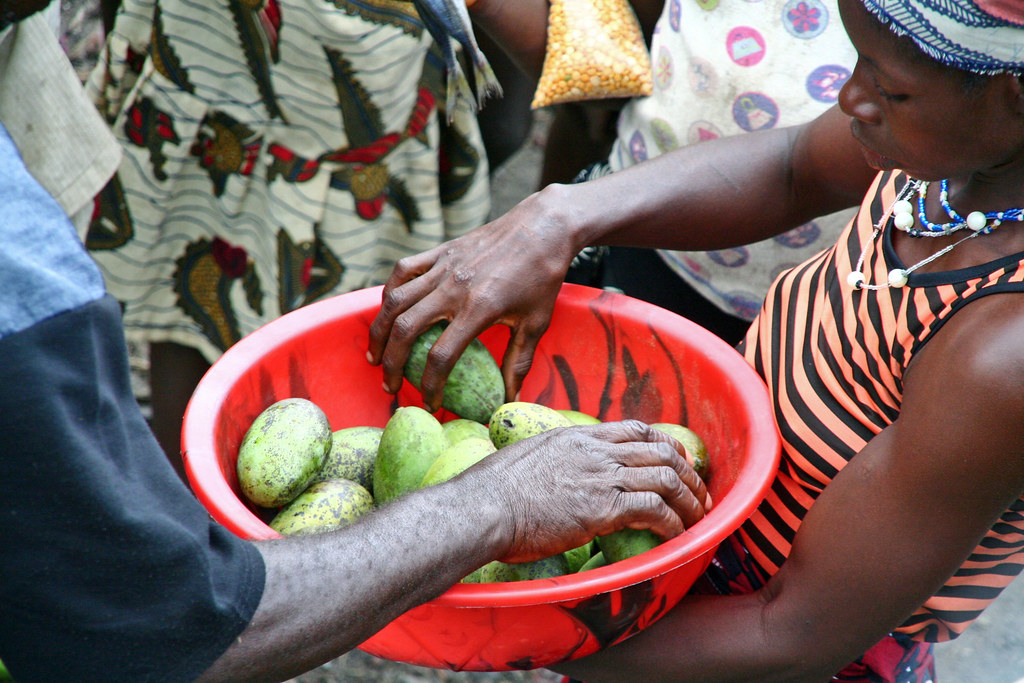
Like so much else in this country, the Bong Mines themselves are a testament to inhumanity. They started grandly: in 1958, the Republic of Liberia signed a deal with a group called DELIMCO, of which the Republic of Liberia was a part (along with some German steel companies), giving DELIMCO the right of prospecting and mining for 70 years. Yes: the Liberian government actually signed a deal with itself, allowing itself to mine itself for seventy years. And somehow, Germans were involved. I'm not making that up.
In 1961, the Bong Mining Company was set up. This time, it also included some Italians. But, don't you worry. The Bong Mining Company merged with DELIMCO about a decade later. Just to confuse you more.
By 1965, the Mines themselves were fully operational, and, at their height, produced seven million metric tons of iron per year from their pits, housed nearly 1500 souls in a nearby township, had a beautiful hospital, port, and railroad, and contained the largest single electricity generator in the world.
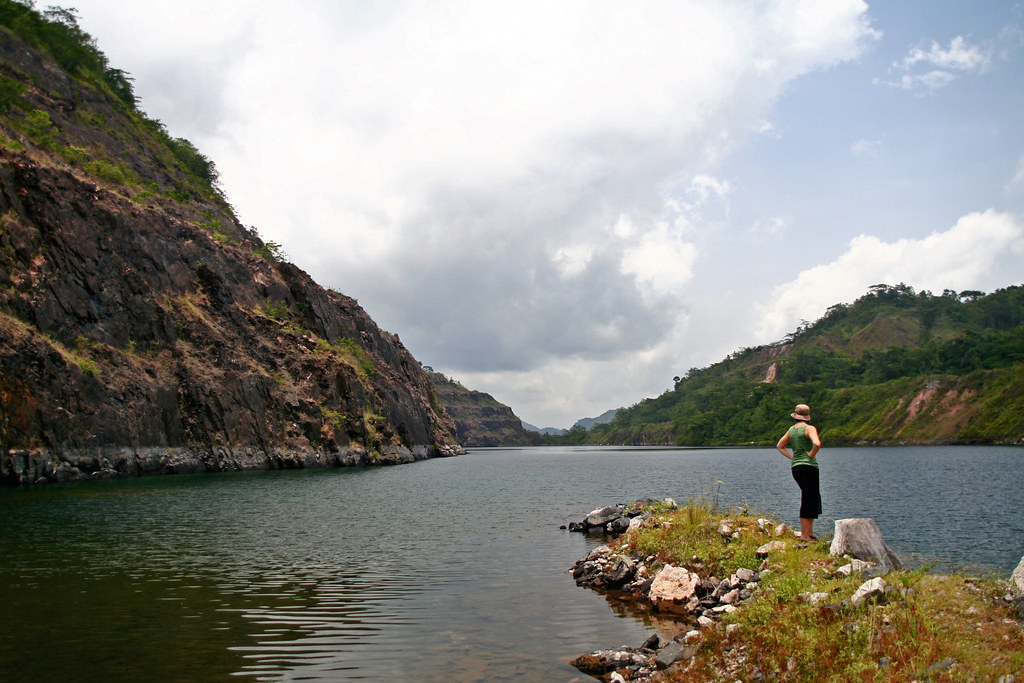
And then, the forces of Charles Ghankay Taylor came. Our guide to the Mines was a day-worker from the ship, a man named Odecious. By the time Taylor's forces overran the mines, 228 of the expat workers had already been airlifted out by the German air force, but Odecious—and most of the Liberian workers—was still there.
July 6, 1990, he told us. They were working when the rebels arrived. All that work ceased under the butt of a gun, and all the Liberians were gathered for a "screening" (his word). This screening determined your right to continue living. And this right was contingent on the tribe into which you were born.
If you were Krahn, you never made it out. If you were Grio, you did. If you were Mandingo, the bullets silenced you. If you were Mano, you were relieved.
See—bear with me; this makes Rwanda seem straightforward—Samuel Kanyon Doe, then the president of Liberia, and a man supportedly massively by the United States, was a Krahn. So, by default, if you were of his tribe, you were no longer worthy to walk the earth. And since certain Mandingo people worked with certain Krahn, the Mandingo had to be exterminated as well. Naturally.
Charles Taylor, the rebel leader and future president, was a Grio, and God smiled on all Grio. Again, naturally. The Mano helped the Grio, and we've already learned how God feels about the Grio. Innocence by association.
On that day, each Liberian had to go through two layers of inspection. The first was a mass screening, carried out by the overtaking soldiers. Its purpose was to weed out all the grossly, obviously tainted. If you somehow made it past that, you were sent to the main gate, on your way out of the mines. There, you had to be vetted again by the head of the rebel contingent himself. His job was to ensure that no Krahn or Mandingo surreptitiously made his way out, dressed in Grio clothing. God forbid. If he didn't like your smile, your accent, the way you shook hands, you simply never stepped over that gate's threshold.
Marble statues and glass dividers
Someone is watching all of the outsiders
The line moves slowly through the numbered gate
Past the mosaic of the head of state
Some 1000 people died in the mines on that day. We went to the field where they were killed. There are still bullet casings on the ground.
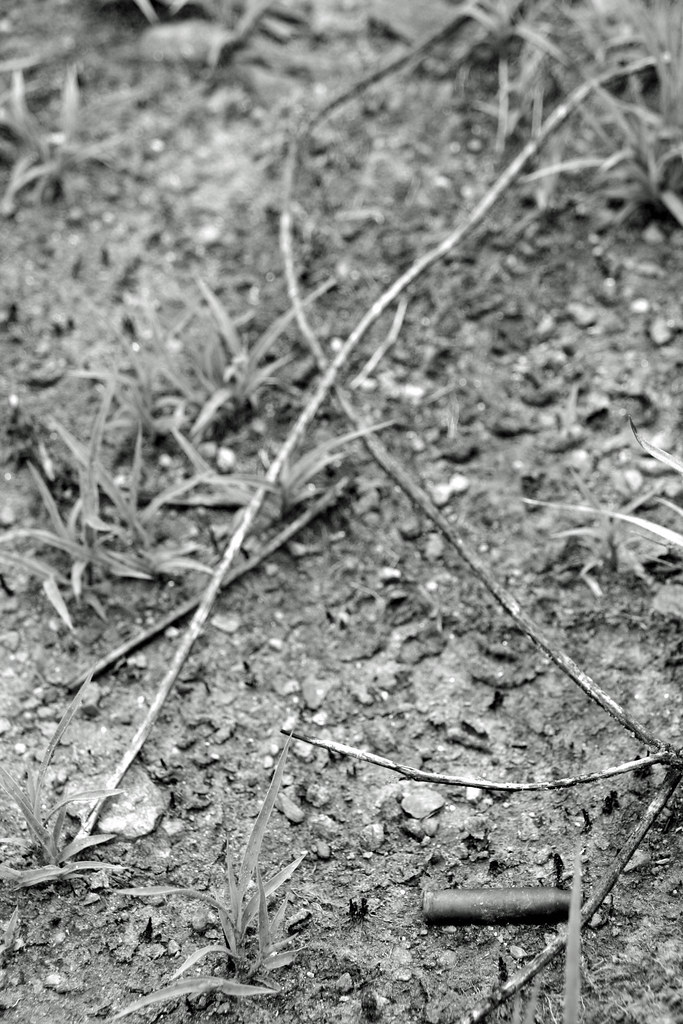
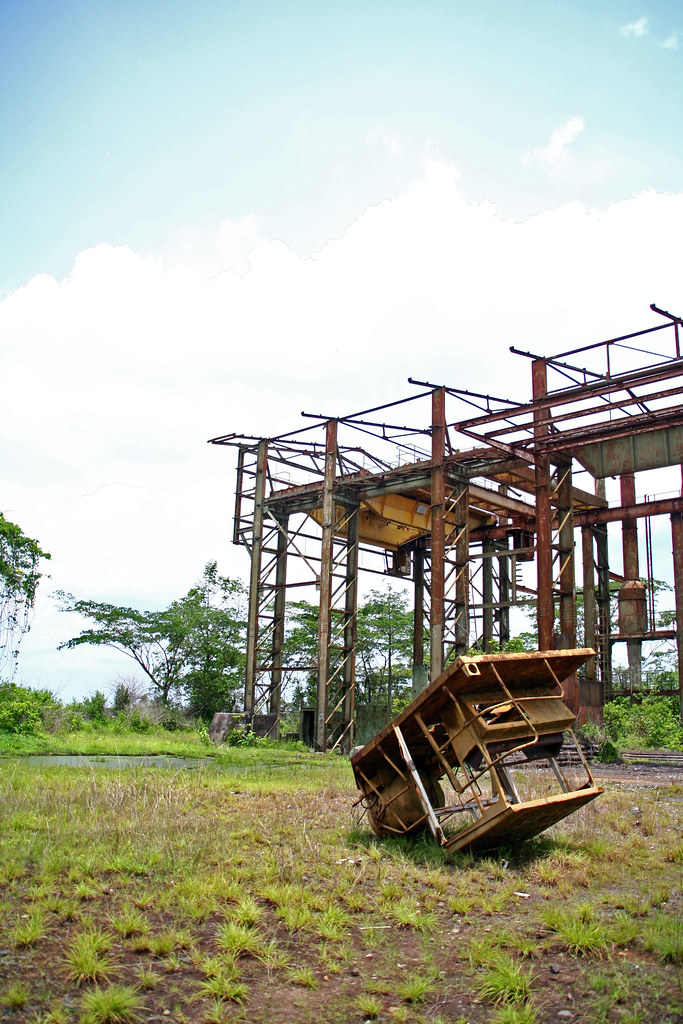
And this was the death of the Mines. They are now being dismantled by an American company, to be sold as scrap metal in the US, while a South African company builds a new mine some miles hence, to transport the iron ore, on Chinese-made roads, into the hands of the Americans, British, Chinese, and South Africans (the Israelis get the diamonds; we're not sure what they're giving in exchange). The enterprising few Liberians who will get anything out of this are the ones furtively gathering pieces of scrap on their own, balancing them on their heads, and walking to the nearest market, to sell them for whatever they can get.
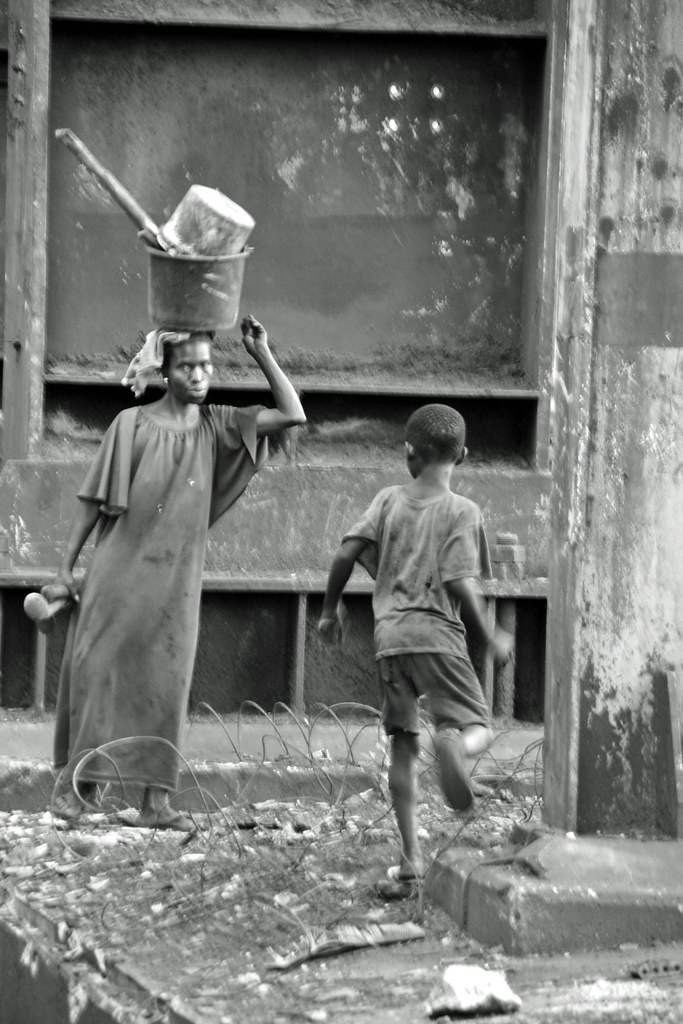
So, the mines are no more. The pits they dug are now a pristine lake (unswimmable unfortunately, thanks to some nasty schistosomes, which, by the way, are just as vulgar as they sound). The beautiful hospital still stands, staffed—we were told—by a physician, a surgeon, and three PAs. None were working the day we visited—which probably irked the three emergency room patients, who composed the sum-total of the occupants of the hospital. One had an IV in. I'm not exactly sure how.
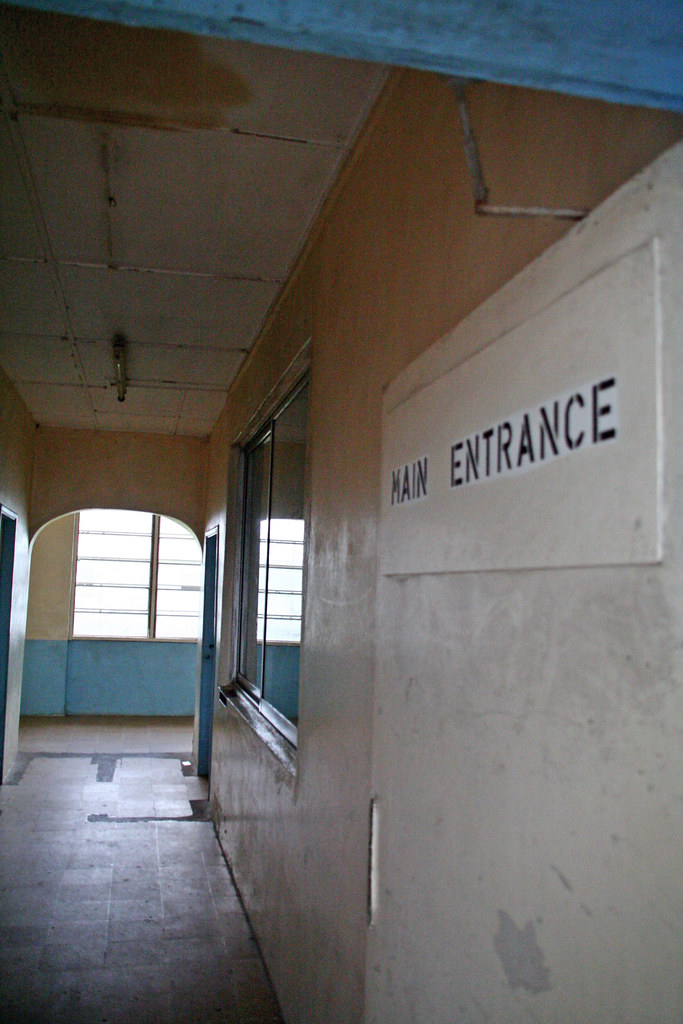
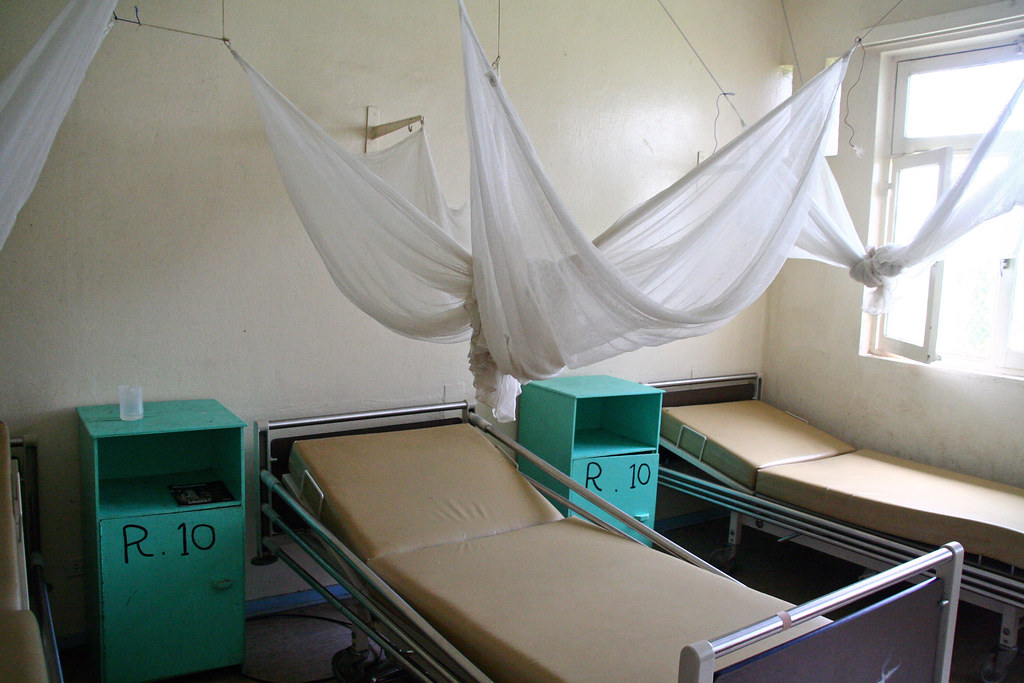
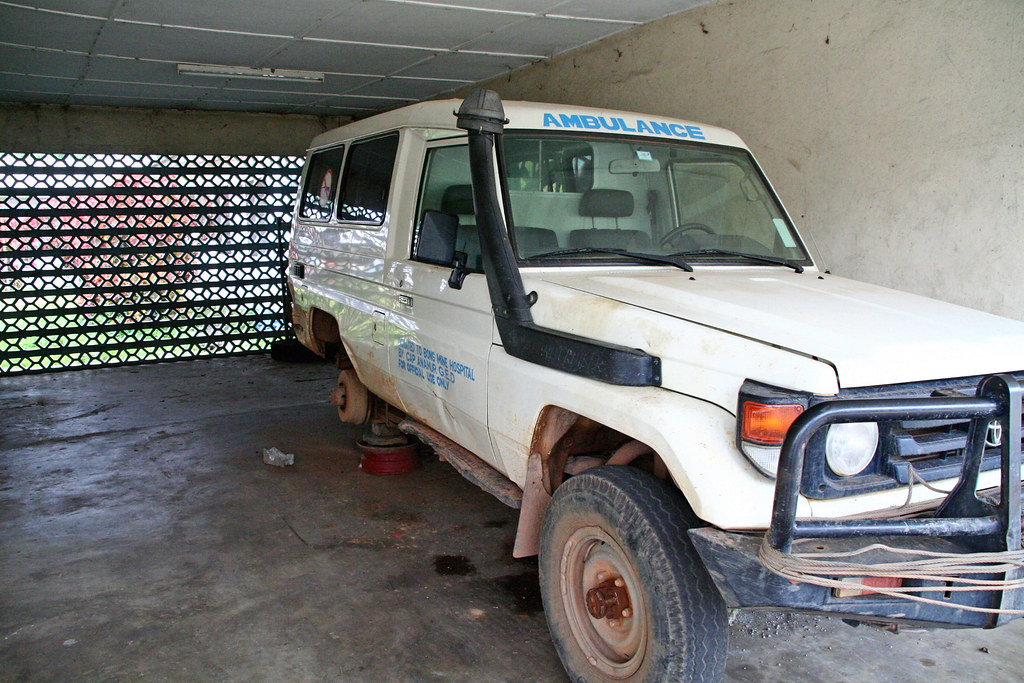
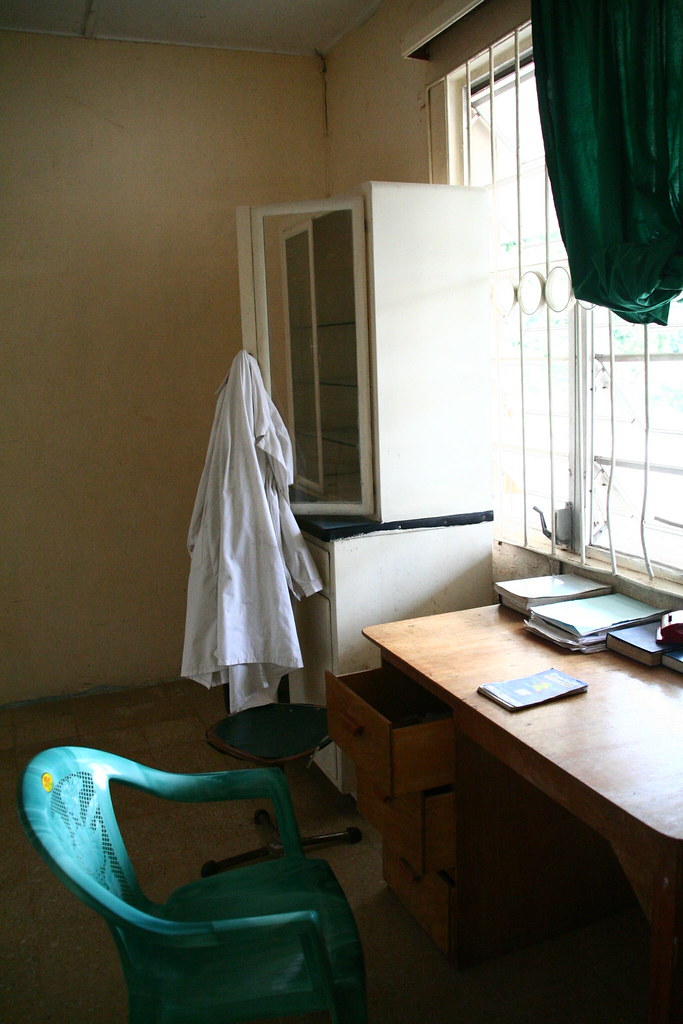
See, the hospital is free. Except that it's not. Except that you have to pay for everything, below-board, and in small, greasy-palmed increments. Except that, without money, you are left—like Victor, a nineteen-year-old boy who had been in a car accident two weeks previously—to lie perfectly still on the porch of a neighbor's house as an infection slowly creeps its way up your body from a purulent, draining leg, transforming a simple fracture into near-certain death. Simply because a hospital turned over to people pulled so recently from desperation allows money to flow freely from the open wound of one man to the pockets of another.
Victor sobered us. The mood on the way back started quiet. But when the skies opened up, and we realized that there were no screws securing the three slats of metal that made up the roof of our Land Rover to each other, the cataracts of water that flooded the back of the car were an awakening. Victor was on his way, on our train, to a hospital in Monrovia. The rain was a brief tropical storm.
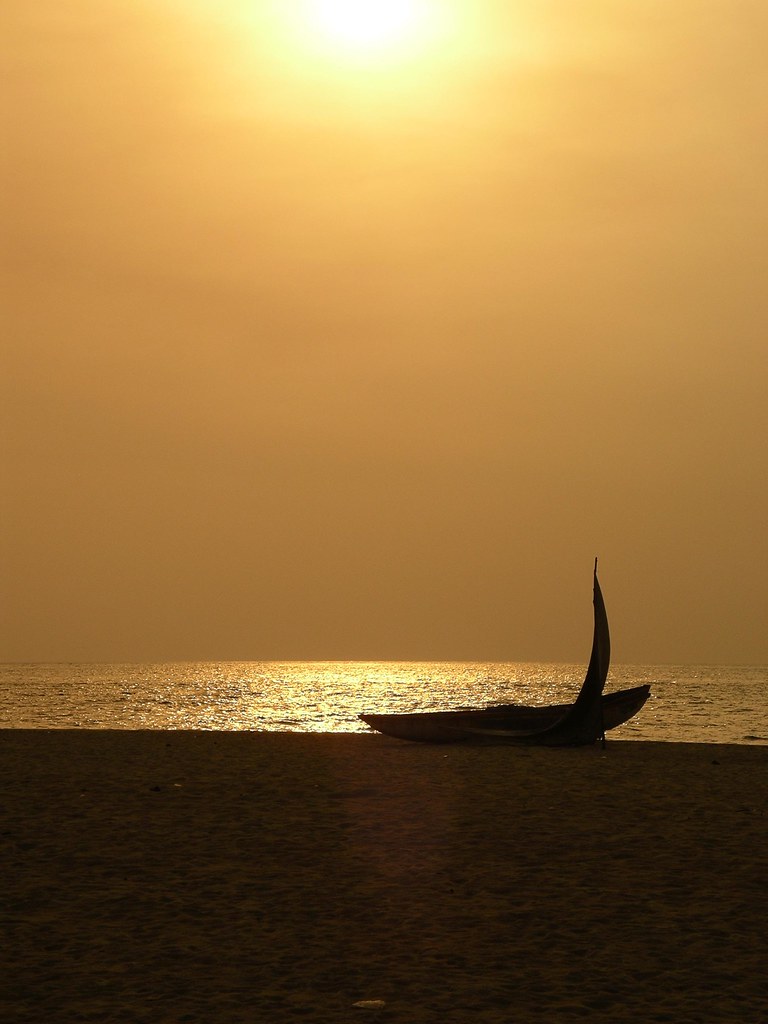
And we...well, we were returning home, under the pinks and yellows of a setting African sun.
23 March 2008
Multicultural crash-test dummies
There are eighteen bridges on the road to Robertsport. The twelfth has become a close friend.
Robertsport—or Rawspoh, as it's pronounced by most Liberians we met—is a once-beautiful town, on a still-beautiful beach, about ten miles south of the border with Sierra Leone, and a three-and-a-half-hour, hundred-mile drive north of Monrovia. Three and a half hours, that is, if it's pulled off without complication. This being Liberia, however, little occurs without complication.
That thought, though, was far from our minds as we piled into five Liberian cabs, with seventeen other Mercy Shippers, on Friday morning, for what promised to be a relaxing overnight camp-on-the-beach affair. I've mentioned it before: the only resemblance between cabs in Liberia and cabs in, say, New York City, is their color. And possibly the mental state, and addiction to speed, of those who drive them. That thought, too, was absent.
Most Liberian cabs are emblazoned with lightning-bolt decals, branded with particularly pithy sayings—God's Time Is Best Time, or Thank God Garbala, for example—and graced by pictures of Madonna (and not the one that precedes "and child", either). We avoided The Blonde One, picked My Love For You Count No Wrong, shook hands with Suri, her owner, and clambered aboard.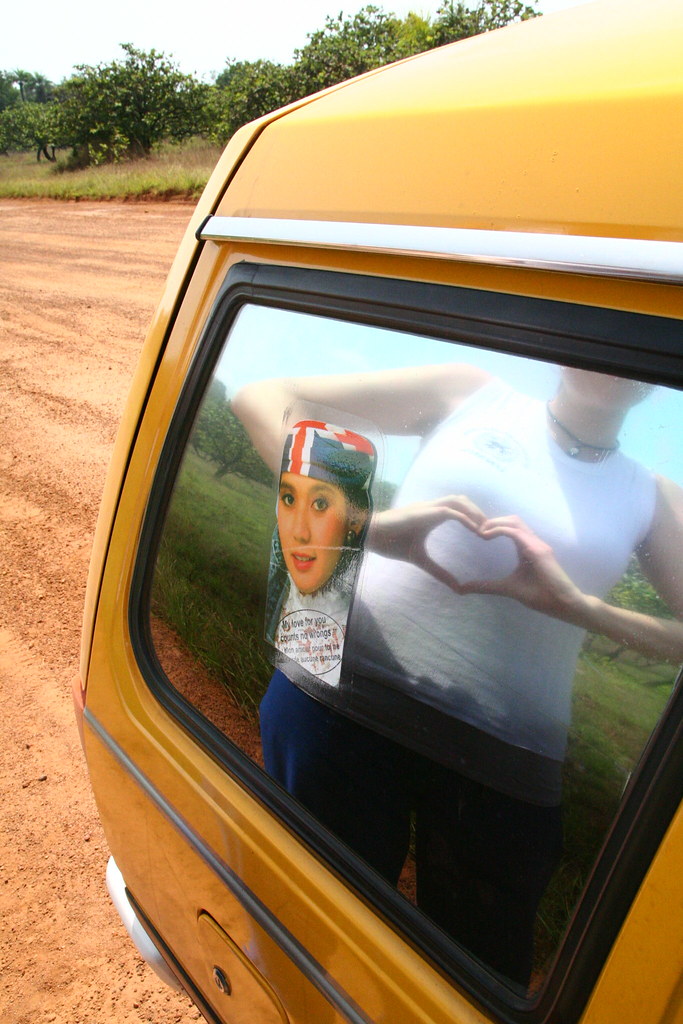
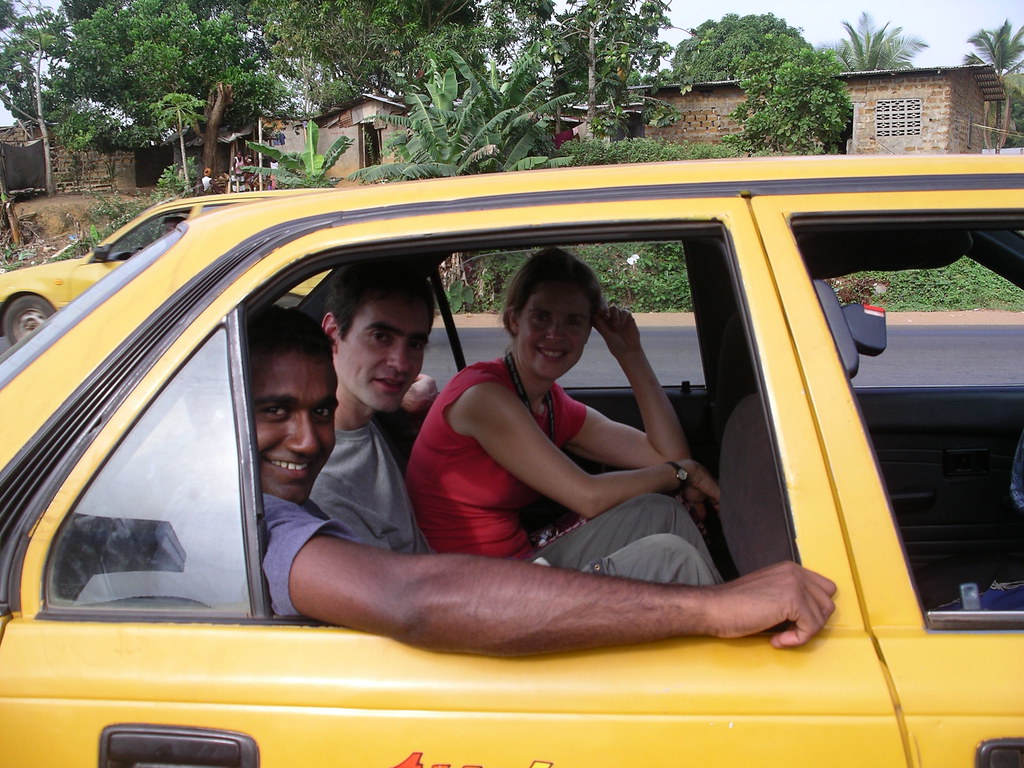
The first two-thirds of the road to Robertsport is actually paved, and littered with UN checkpoints, stray chickens, and shops named after theologic apothegms of more depth than many of today's churches. God Knows Why Cellphone Repair. The Lord's Chosen Cement Factory. God's First Money Exchange (is that a possessive or a contraction?). We breezed past them all, and, immediately after the invitingly dirty (and jarringly plural) Mother and Child Guests House, we made an abrupt left onto a dirt road.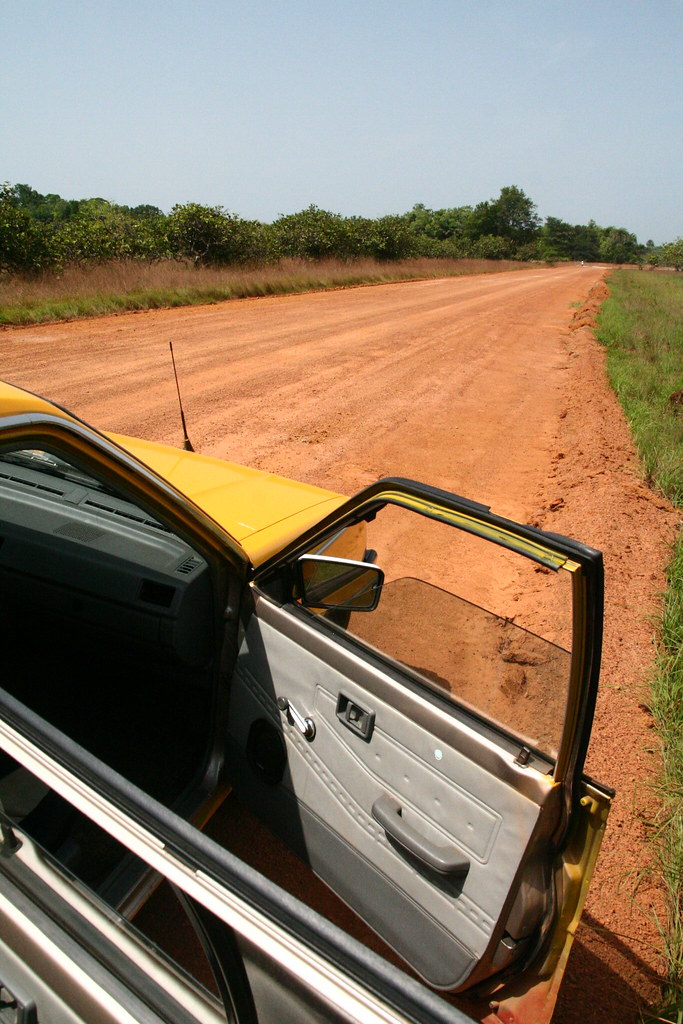
That's where the bridges began. Suri maneuvered Count No Wrong with agility belying his misfortune of having a celebrity kid named after him. Count No Wrong responded to his suggestions without complaint. Her love for us was living up to her name. When the tire on another cab (aptly named Why Me?) blew, Count No Wrong sailed on by without a hitch. (The spare was provided by The Lord Is On My Side. All cabs carry a spare tire—heaven forbid, though, the tire actually fit the cab that carries it).
Emboldened by his success at avoiding the first major hitch, and with no small amount of encouragement from us, Suri sped Count No Wrong to the head of the pack. This had the added benefit of placing us clear out of the plumes of red dust that trailed each cab. We were going to arrive in Robertsport clean, wind-swept, and hitch-free.
Bridge 12 had other plans for us. Each of the eighteen Pakistani-built bridges on the road to Robertsport is of rickety wooden construction, wide enough for one car to pass, and that only slowly. Appropriately, Suri slowed down for Bridge 12.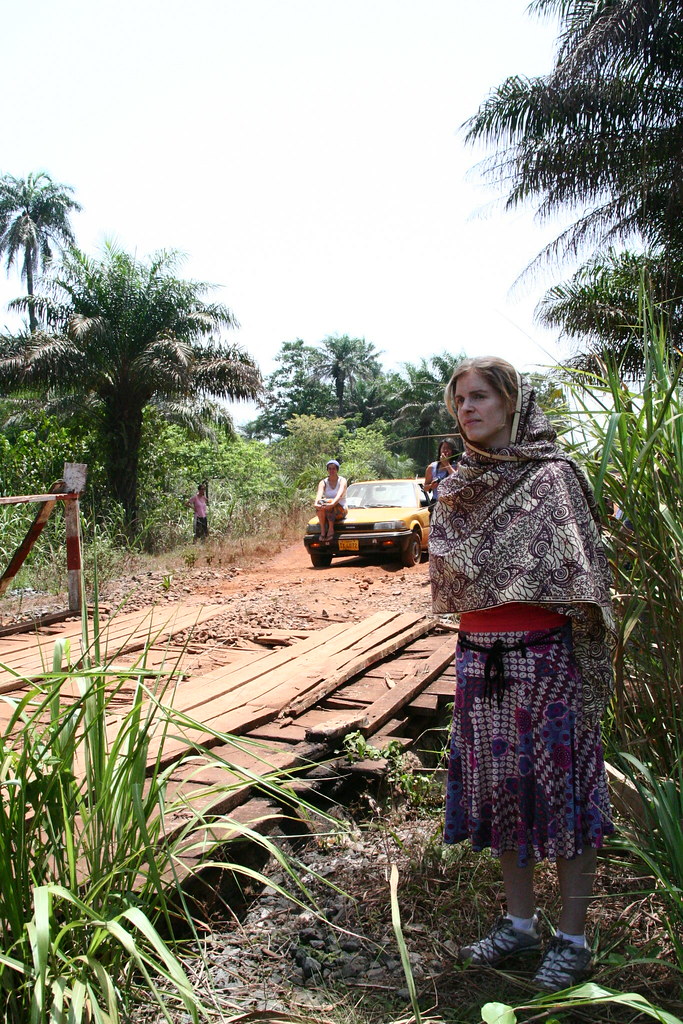
It is unfortunate that the plume of red dust that trailed us, and the cars it enveloped, didn't.
The sound is hard to describe. It's loud, brusque, and jolting, an explosive, black, metallic clap. Our bodies pivoted on our necks, backwards, then immediately forward, like so many wide-eyed, multicultural crash-test dummies. And then our car lurched forward. And to the left. And time became elastic. And the bridge's wooden barricade filled our windscreen. And then it didn't, pushed under the wheels of the car.
And then we fell off the edge.
Down into the gully, flattening tall grasses, shrubs, and nascent trees. I could hear someone's voice saying, "Jesus keep us safe." I could hear the voice in my head saying, "Wow. This might actually be how we die." Nobody turned. No one screamed. Another voice in another person's head said, "I don't care what happens. Just please don't let it hurt."
And then we stopped. Landed. Halted by one final tree.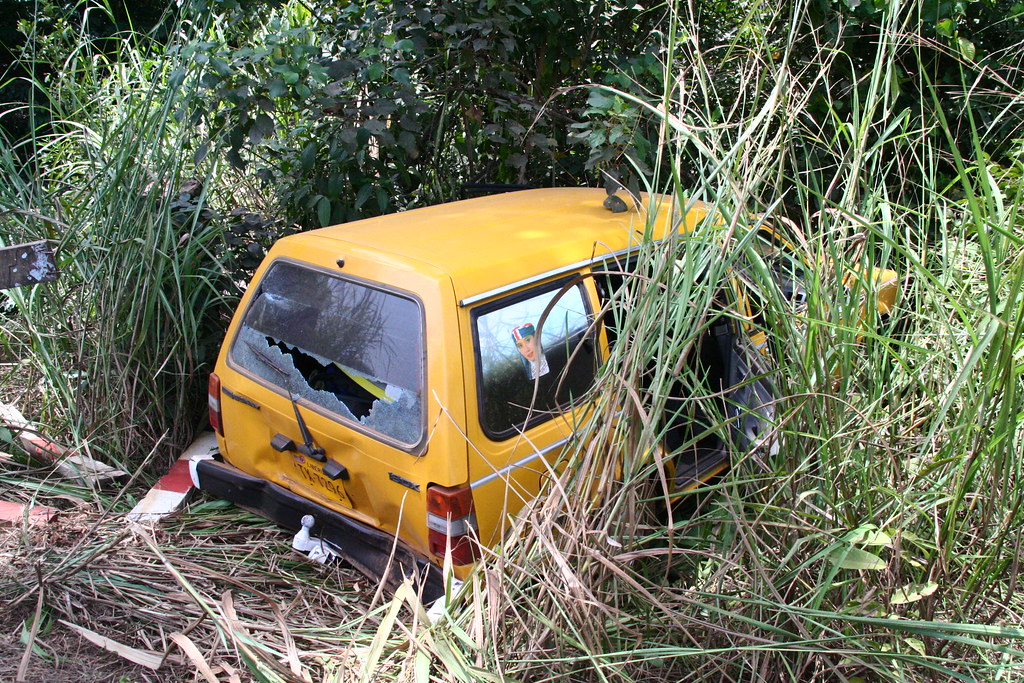
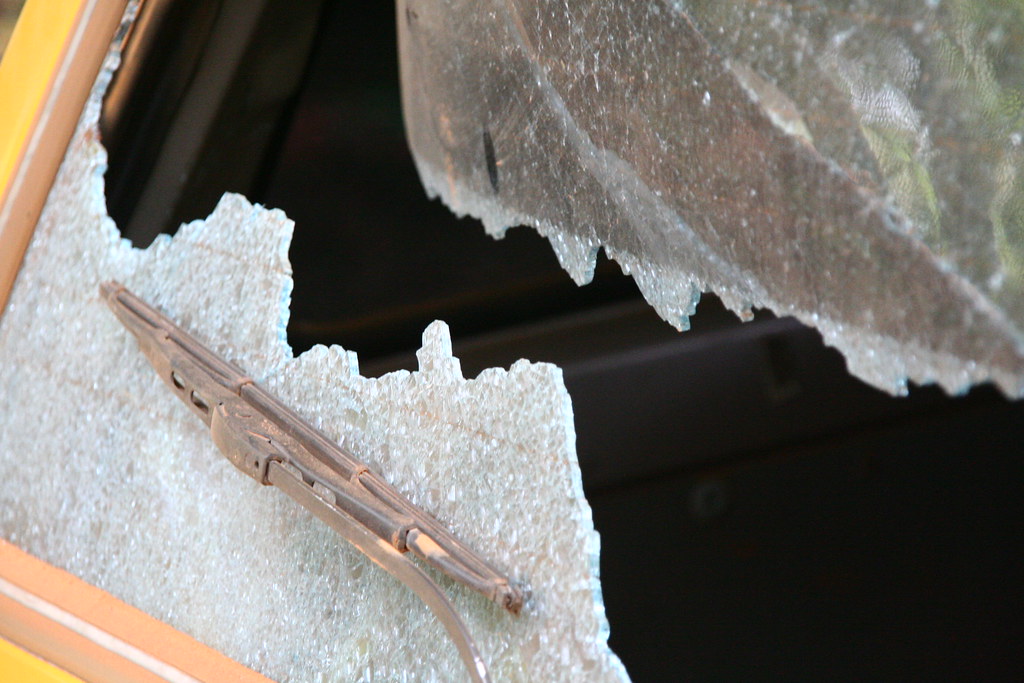
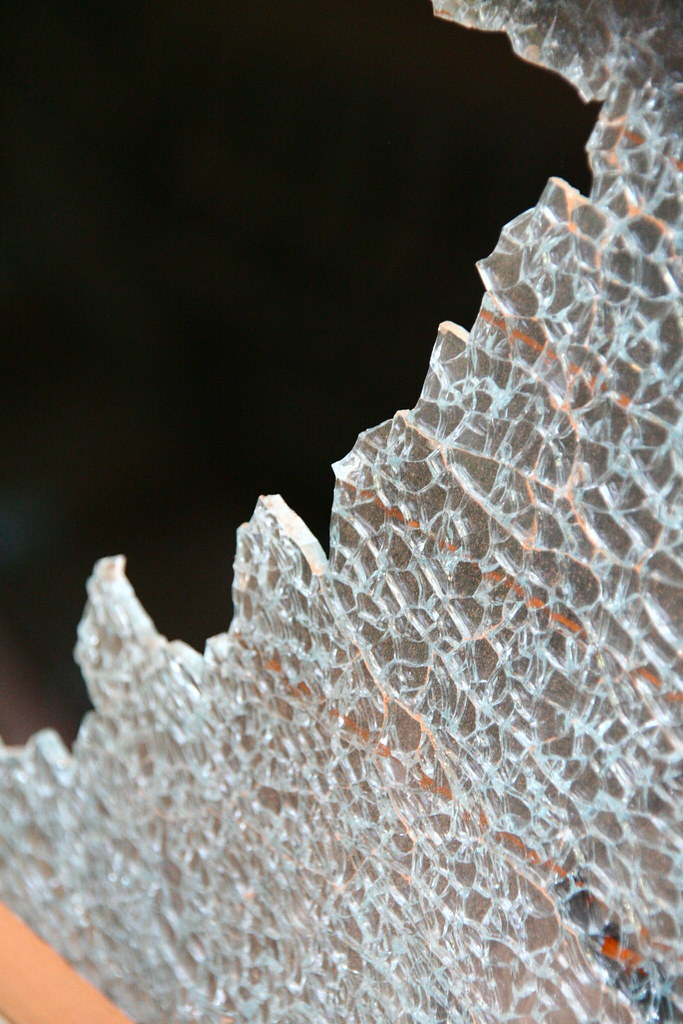
And there was silence. Nobody spoke. Nobody breathed. Finally, a voice from outside the car, from above us, "Is everyone OK?"
Time snapped back with a huff, regimentedly shuffling away from us with nary a look over his shoulder. Slowly, we started asking each other the same question. Was everyone OK?
Everyone was. Necks were sore (though not nearly as sore as they were about to get over the next forty-eight hours). One of us had sustained a blow to the back of the head from an errant guitar case. But, barring the scrapes, bruises, and bewilderment, we were unscathed.
And here is where the life of the NGO worker gets surreal. Not five hundred yards down the road was a detachment of the self-same Pakistani battalion that had built the bridge which nearly destroyed us. It takes a certain person, it seems, to work for an NGO, and Pakistani UN soldiers are no different. Normal human beings with a streak of the insane.
The first thing they did was to make sure we were OK. The next was to whip out their cell phones and start taking pictures.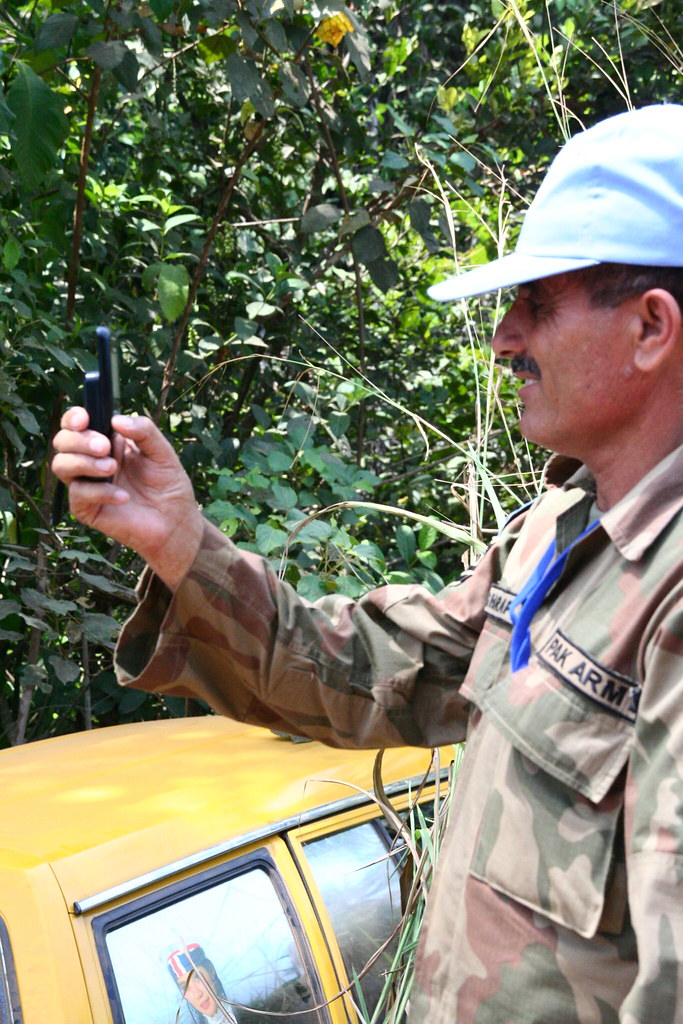
They spoke little English, but one of our travelling companions (who was raised in Fiji but lives in Canada), spoke Hindi (naturally). And because—red-faced politicking notwithstanding—Hindi and Urdu are simply dialects of the same langauge, when he began speaking to them in Hindi, they congratulated him on his Urdu. Between them, they determined that the car would stay there until the police found it. The now-carless would pile onto the back of the UN truck.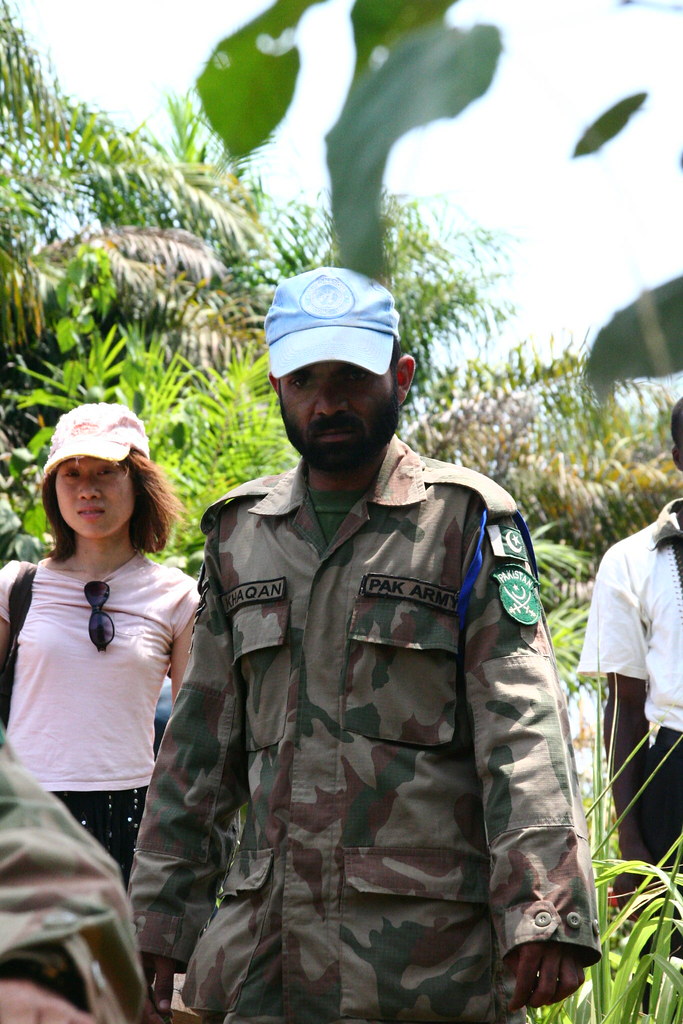
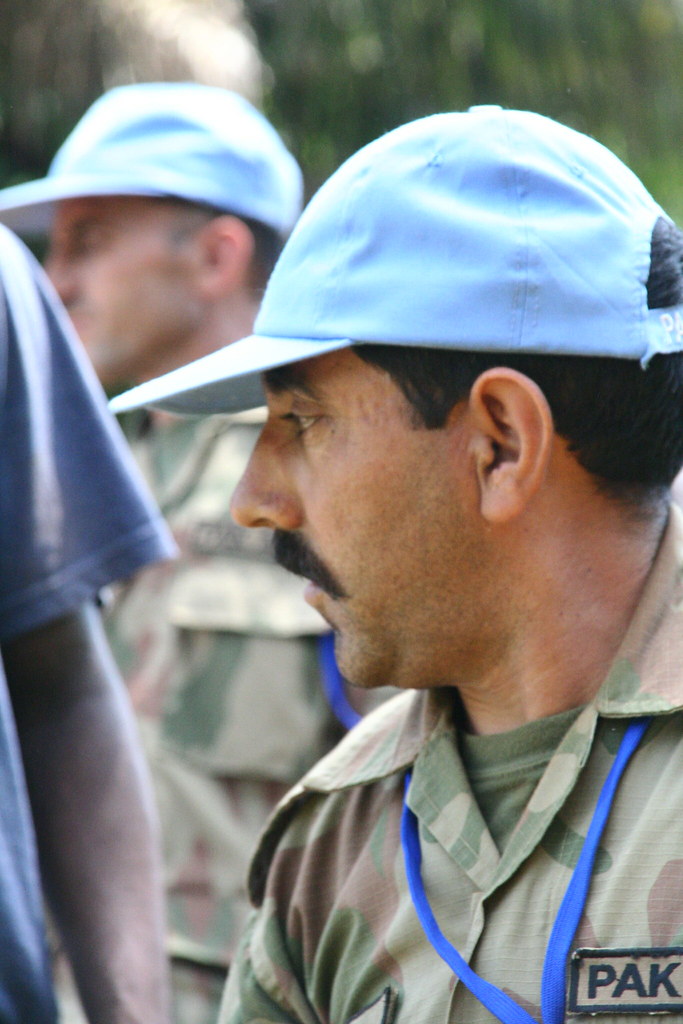
This is how we found ourselves sitting atop large bamboo rods, packed hip-to-shoulder with six men and their automatic weapons, listening to one sing a song, softly, into the wind and dust, driven through the African bush to the air-conditioned compound of the Pakistani UN battalion (Motto: Twenty-six, Brave and Brisk. I'm not making that up).
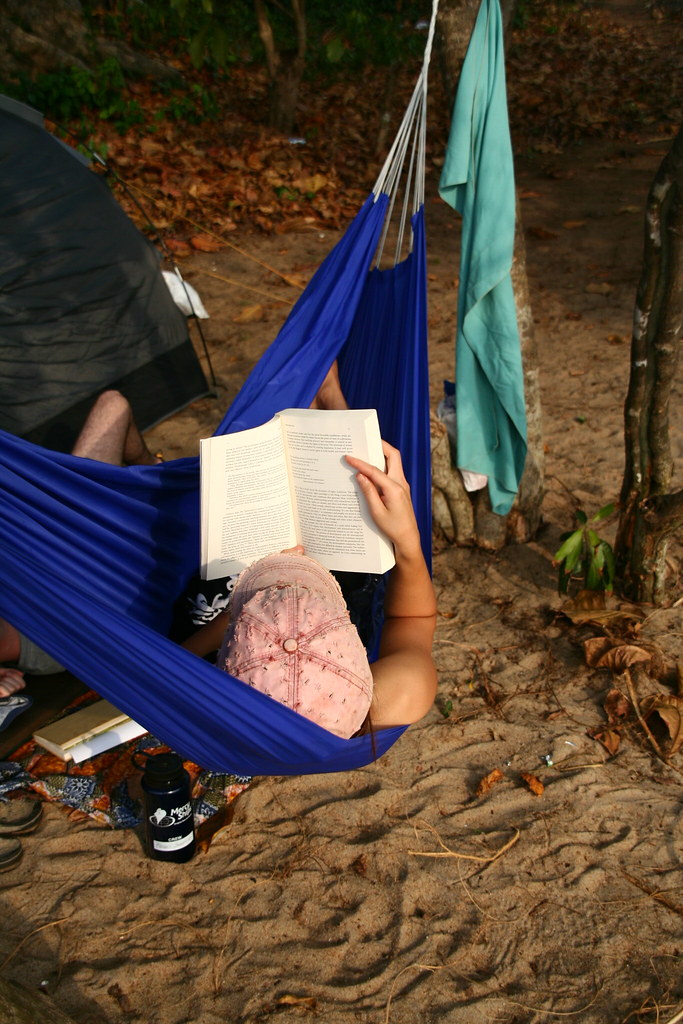
What happened during the remainder of the trip—the offer, by the UN commanding officer, of one of his own vehicles to take us the rest of the way to Robertsport, the pristine beach, the waves that taught me what drowning actually feels like, the torrential downpour that bested our tent, the campfire, the boiled cassava, the sunset, the crabs, and the flat tire on the way back (this time, there was no spare; don't ask)—pales in comparison.